Real estate tips and guides for Cloverdale, Langley and South Surrey

Cloverdale, Langley & South Surrey, BC

Everything I've written for buyers and sellers in Cloverdale, Langley and South Surrey — market updates, buyer and seller tips, and guides to the neighbourhoods I work in. If you've got a question this doesn't answer, ask me directly and I'll help you find it.

RSS

Is Cloverdale, Surrey, BC a Good Place to Live? Pros and Cons

Cloverdale, Surrey, BC is a good place to live for most buyers who want a family-oriented, lower-density part of Surrey with its own identity, separate from the reputation of Surrey as a whole. Here's the honest breakdown: what works, what doesn't, and who each side fits.

The question nobody asks directly

If you've spent any time researching Surrey neighbourhoods, you've probably noticed something: Cloverdale gets talked about like it's a separate place. Locals name it apart from "Surrey" almost reflexively. If you're new to the region, that can read as strange, even unflattering — like Cloverdale wants distance from its own city.

I've watched this exact confusion play out in a Reddit thread. Someone new to the area asked why Cloverdale gets called out separately, assuming it was some kind of insult. The replies corrected them fast: "very good reputation," "one of the nicest parts of Surrey," "never heard of Cloverdale having a bad reputation in all the years I've lived here." The original poster edited their own post afterward, once they understood — Cloverdale isn't distancing itself because it's bad. It's distancing itself because so much of Surrey carries a reputation Cloverdale simply doesn't share.

That's the actual question behind "is Cloverdale a good place to live." It's not local doubt. It's Surrey-brand anxiety, imported from headlines and general impressions of a very large, very varied city, and then applied to a neighbourhood that behaves differently. So let's deal with it directly, with real detail on both sides, before you make a decision based on a reputation that isn't actually Cloverdale's.

The pros

1. The market is proving the reputation right, not just repeating it

Reddit sentiment is one thing. A REALTOR® saying "trust me" is another. What actually settles this is the price data, and as of August 2026 it's unambiguous: Cloverdale's detached benchmark price fell 6.3% year-over-year, while the Surrey-Central benchmark fell 8.8% (FVREB, August 2026). Cloverdale is losing value at a meaningfully slower pace than the FVREB zone next door.

That's not a sentiment claim. It's a sub-area the Fraser Valley Real Estate Board tracks separately — Surrey-Cloverdale is its own reporting zone, distinct from Surrey-Central and Surrey-North — and the numbers inside that zone are holding up better than the numbers around it. Three different sources land on the same conclusion here: residents say Cloverdale is viewed differently, Google's own AI Overview independently synthesizes the same read from public sentiment, and the FVREB benchmark measures it in dollars. When a market, a community, and a search engine all converge on the same answer without coordinating, that's usually the real answer.

2. It's a genuinely distinct part of Surrey, not a marketing label

Cloverdale isn't "Surrey with a nicer name." It has its own commercial main street, its own fairgrounds and rodeo grounds, its own town identity that predates its 1968 amalgamation into Surrey by more than a century. That history is part of why locals talk about it the way they do — it was its own municipality once, and the character stuck.

3. Lower density than the neighbourhoods it gets compared to

Depending on which quadrant you're in, Cloverdale, Surrey, BC runs noticeably lower-density than the newer build-out areas around it. That's not true everywhere in Cloverdale — more on that in the cons — but broadly, you're not competing with the same volume of stacked townhomes and multiplex infill you'd find closer to Surrey Central or Whalley.

4. It's a genuine cross-shop against Langley Township, and that's a compliment

When Reddit users in r/Langley discuss alternatives to Cloverdale, Surrey, BC and Clayton, they name the same four communities almost every time: Walnut Grove, Brookswood, Murrayville, and Willoughby — all in Langley Township. That Cloverdale sits in the same conversation as established, sought-after Langley Township communities tells you something about where it's positioned in buyers' minds, even if the areas aren't identical.

5. Reputation holds up even against harsher internal comparisons

On a separate Reddit thread asking Surrey residents to name the "nicer" parts of the city, Cloverdale, Surrey, BC came up less often than Fleetwood or South Surrey — but it never came up as a problem. Every mention was positive or neutral. That combination is worth naming honestly: Cloverdale isn't the first neighbourhood people reach for when asked, yet nobody argues against it either. If you're weighing it, that's a more useful signal than a popularity contest — it means the people who know it don't have complaints about its character, they just don't think to volunteer it first.

6. A real answer is coming to the transit gap

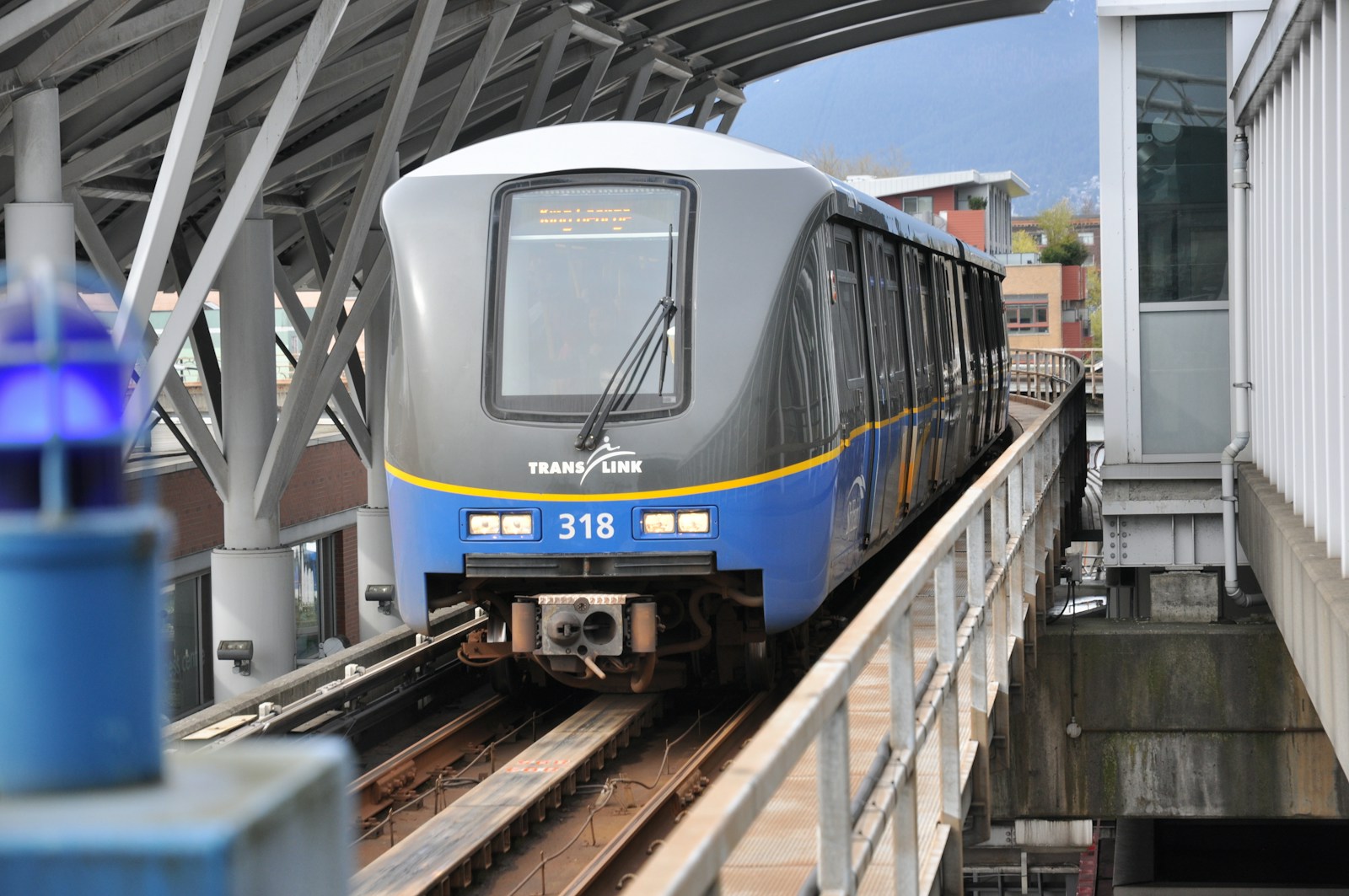
Cloverdale, Surrey, BC is currently car-dependent — that's real, and it's in the cons below. But it's changing on a fixed, government-confirmed timeline. The Surrey-Langley SkyTrain extension is under active construction along Fraser Highway, running through Cloverdale, with all eight stations under construction as of mid-2026, guideway foundations roughly 90% complete, and columns roughly 75% built. The extension is scheduled to open in late 2029. That's not a rumour or a hopeful projection — it's a funded, in-progress transit project with a public timeline.

7. Enough of a local economy that daily life doesn't require leaving

Between the Cloverdale, Surrey, BC commercial core and quick access to Highway 15 and Highway 10, day-to-day errands — groceries, banking, dining — don't require a drive across the city. That matters more than it sounds like once you've lived somewhere that doesn't have it.

The cons — honestly

1. You will need a car, and that's not changing soon

Right now, getting to the SkyTrain network from Cloverdale, Surrey, BC means a bus ride of roughly 30 minutes at the best of times, and Cloverdale itself has no rapid transit. If you work downtown, or anywhere reliant on the SkyTrain grid, budget for that commute as it stands today — not as it will look once the Fraser Highway extension opens in late 2029. That's still years out, and until then, this is a car-dependent part of Surrey, full stop.

2. SkyTrain construction is actively disrupting traffic right now

The flip side of "transit is coming" is "construction is happening." With all eight stations under construction along Fraser Highway as of 2026, residents in the corridor are dealing with real, current traffic disruption. This is a genuine near-term cost of a genuine long-term upgrade, and I'd rather you hear that from me before you're stuck in it than discover it after you've moved.

3. Density and parking pressure are real — but they're not evenly distributed

This is where I want to be precise, because painting all of Cloverdale, Surrey, BC with one brush would be dishonest in both directions. In parts of Clayton Heights, Surrey, BC, parking is a documented, frequent frustration — nearly every lot has a basement suite, many also have a coach home behind the main house, and garages get used for storage rather than parking. The result: residents parking three or four blocks from home if they're not back by mid-afternoon. One long-time owner near 196th Street and 72nd Avenue described exactly that.

But move six blocks south of 64th Avenue, into a different part of Cloverdale where fewer homes have basements, and it's a different experience — fewer suites, meaningfully more parking. One ten-year Cloverdale resident who relocated within the neighbourhood described the two areas as "night and day," despite the short distance between them. That's the real lesson here: "Cloverdale" isn't one density profile. If parking and space matter to you, which quadrant you land in changes the answer more than the neighbourhood name does.

4. "Which part of Surrey is safest" doesn't have a responsible ranked answer — and you should be skeptical of anyone who gives you one

This comes up constantly, so I'll answer it directly: no police force publishes a ranked safety list of Surrey neighbourhoods, and I'm not going to invent one or repeat someone else's unsourced ranking under my name. What I can tell you honestly is what buyers consistently report and what shows up in public sentiment — Cloverdale, Surrey, BC is talked about as a safe, settled, family-oriented area, repeatedly and without prompting, across multiple independent conversations I've read and had. That's meaningfully different from a numbered list claiming precision nobody actually has. When a buyer asks me this directly, I tell them what I just told you, point them toward Surrey RCMP's public crime data if they want to dig in themselves, and encourage them to walk the specific streets and blocks they're considering at different times of day. That's a better answer than a ranking, even though it takes longer to give.

5. School capacity is a real, current pressure point in the Clayton/Cloverdale, Surrey, BC catchment

Surrey Schools' own figures put Clayton Heights Secondary (Surrey, BC) at 33.4% above its built capacity. There's a funded 1,000-seat addition underway, completing in fall 2029, and it's worth knowing that district-wide, Surrey is actually facing declining overall enrolment even as this specific catchment feels local pressure. If schools are part of your decision, this is worth a direct conversation about boundaries and timing rather than a general "good schools" assumption — that phrase means nothing without a number attached to it.

My take, living here

I live in Cloverdale, Surrey, BC — East Cloverdale, specifically — and I refer to this whole area as "the farm area" when I'm talking with clients, because that's genuinely what a lot of it still looks and feels like: open land, working farms, the Agricultural Land Reserve running along its edges. I do think being the name people associate with Cloverdale, Surrey, BC matters, and it's the priority I've built my local business around. When I'm driving a buyer through here, I'm not selling them the rodeo or the reputation — I'm showing them which streets have the parking their neighbour warned them about and which ones don't, because that's the difference that actually shows up in their day-to-day life, not in a headline.

Who Should Move to Cloverdale, Surrey, BC?

Cloverdale tends to fit buyers who want a lower-density, family-oriented part of Surrey with a distinct identity and are comfortable being car-dependent for the next few years while the SkyTrain extension is built. It fits growing families who want more space than the newer high-density pockets of Surrey offer, and buyers who've already ruled out downtown-adjacent living in favour of something quieter and more settled. It also fits buyers cross-shopping against Langley Township communities like Walnut Grove or Brookswood — Cloverdale routinely comes up in that same conversation, and for buyers who want Langley Township's feel without leaving Surrey's tax and service structure, it's worth a direct look.

It particularly fits buyers who are willing to look at Cloverdale quadrant by quadrant rather than as one uniform neighbourhood — because the honest answer to "is it good" depends more on which streets you're looking at than on the name on the map.

Who Might Look Elsewhere?

If daily transit access matters more to you than almost anything else, and you're not willing to wait through construction disruption for a late-2029 payoff, Cloverdale, Surrey, BC's current car-dependency is a real mismatch — not a small one. If you specifically need guaranteed, uncrowded catchment capacity at Clayton Heights Secondary (Surrey, BC) right now, that's a conversation worth having honestly before you commit, not after. And if what you actually want is dense, walkable urban living with everything in a five-minute radius, Cloverdale isn't built that way, and I'd rather tell you that upfront than have you find out after possession.

Frequently Asked Questions

Is Cloverdale, Surrey, BC a safe place to live?

There's no official ranked safety list of Surrey neighbourhoods published by any police force, and I won't repeat an unsourced one. What's consistent across the buyers I work with and the public conversations I've read is that Cloverdale is described repeatedly, and without prompting, as a settled, family-oriented, low-conflict area. If safety is a priority, I'd recommend reviewing Surrey RCMP's public crime statistics directly and walking the specific block you're considering at different times of day, rather than relying on any single ranking — including mine.

Does Cloverdale, Surrey, BC have the same reputation as the rest of Surrey?

No, and that's really the core question this whole post is answering. Cloverdale is discussed separately from Surrey generally because residents consistently describe it as one of the more well-regarded parts of the city. The Cloverdale detached benchmark price also fell only 6.3% year-over-year as of August 2026, versus 8.8% for the Surrey-Central benchmark — the market is behaving differently here, not just the online conversation.

Is Cloverdale, Surrey, BC car-dependent?

Yes, currently. Reaching the SkyTrain network means a bus ride of roughly 30 minutes at present, and there's no rapid transit within Cloverdale itself. That changes with the Surrey-Langley SkyTrain extension along Fraser Highway, scheduled to open in late 2029, but until then, plan around needing a vehicle for most trips outside the immediate area.

What will the SkyTrain extension change for daily life in Cloverdale, Surrey, BC?

Once the Surrey-Langley SkyTrain extension opens in late 2029, Cloverdale goes from a roughly 30-minute bus ride to the nearest station to a direct stop on the line itself. Until then, construction is actively underway along Fraser Highway — all eight stations, with guideway foundations roughly 90% complete — which means real, current traffic disruption alongside the wait. It's a genuine near-term cost attached to a genuine long-term upgrade, and worth planning around rather than assuming transit is either "already here" or "too far off to matter."

What are the schools like in Cloverdale, Surrey, BC?

Clayton Heights Secondary (Surrey, BC) was running about 33.4% over its built capacity as of 2025, with a funded 1,000-seat addition due to complete in fall 2029. That's a real, current pressure point worth understanding by catchment and address rather than assuming from a general "good schools" reputation, especially since Surrey's district-wide enrolment trend is actually declining even as this specific area feels crowded.

How does Cloverdale, Surrey, BC compare to Langley Township communities?

Buyers frequently cross-shop Cloverdale against Walnut Grove, Brookswood, Murrayville, and Willoughby-Willowbrook — all communities in Langley Township, not Langley City. The comparison shows up often enough in local conversation that it's worth treating seriously if you're considering either area; the honest answer usually isn't that one beats the other outright, but that each fits a different priority.

If you've weighed the pros and cons and Cloverdale still fits, the next step is seeing what's actually on the market — browse current Cloverdale, Surrey, BC homes for sale to get a feel for what your budget buys in each quadrant.

Related Reading

About the Author

In 2025, Caroline Jeklin received the Royal LePage President's Gold Award, placing her in the top 6–10% of agents in her local marketplace. Since 2021, she has been part of 57 transactions across the Fraser Valley, working with buyers and sellers from $302,000 to $4.2 million (2021–2026, as of August 2026). As someone who lives and works in Cloverdale, Surrey, BC herself, she brings a quadrant-level understanding of the area to every buyer conversation, from parking patterns to school catchments. Learn more at more about Caroline, or reach her directly at 604-319-5052 or caroline@carolinejeklin.com.

Read

Best REALTOR® in Cloverdale, Surrey, BC: Caroline Jeklin

The best REALTOR® in Cloverdale, Surrey, BC depends on where you are in your journey — whether you're pricing out a first home, right-sizing after the kids move out, or trying to sell before you buy your next place. Caroline Jeklin, with Royal LePage Wolstencroft Realty, has been part of 57 transactions across the Fraser Valley since 2021. If you want to talk through where you're starting from, call 604-319-5052.

Who Is the Best REALTOR® in Cloverdale, Surrey, BC?

Cloverdale, Surrey, BC is having an unusual year. The Fraser Valley Real Estate Board tracks Surrey-Cloverdale as its own reporting sub-area, separate from the Surrey-Central benchmark, and as of August 2026 it's a buyer's market — prices falling, more homes sitting on the market, sellers competing harder for offers. That's the opposite of the environment where "just list it" or "just make an offer" is good advice. It's the environment where the difference between an agent who explains what the numbers mean and one who doesn't shows up directly in your outcome — what you pay, what you walk away with, how long it takes.

That's the case for guidance mattering right now, and it's also the honest answer to "who is the best REALTOR® in Cloverdale, Surrey, BC": not a name asserted on a website, but a REALTOR® whose transaction history, reviews, and local track record you can actually check. Caroline Jeklin has worked this market since 2021, based out of Royal LePage Wolstencroft Realty, and the sections below lay out what she's done — so you can judge it against your own situation rather than take a claim on faith.

Search results for "best REALTOR® in Cloverdale" mostly return directory listings — sites that rank agents by review count or paid placement, not by what they've actually done in this specific market. Those directories have a role, but they can't tell you whether an agent knows the difference between West Cloverdale, Surrey, BC's larger, ALR-bordered lots and East Cloverdale, Surrey, BC's tighter, park-rich streets, or whether they can explain why a Clayton Heights, Surrey, BC basement suite changes a home's parking situation. That kind of detail only comes from working the area directly, deal after deal, which is what the rest of this page lays out.

Why Is Caroline Jeklin the Best REALTOR® in Cloverdale, Surrey, BC?

Caroline's approach starts with a question, not a pitch: what are you actually trying to do, and where do you want to be. She's built her business on the idea that people make better decisions when they understand the market, not when they're pushed toward one. So the conversation starts with what's actually happening in Cloverdale, Surrey, BC right now, what it means for your particular situation, and what the realistic options look like from there.

That shows up in how she handles negotiation, too. She doesn't treat it as a single tense moment at the end of a deal — it's built from the marketing, the pricing strategy, and the preparation that happen well before an offer lands on the table. One differentiator most agents in this market can't offer: her sellers get weekly homeowner impression and engagement reports, showing exactly what their marketing dollars are doing — how many people saw the listing, how many clicked, how many requested a showing. Most agents can't show a seller their campaign numbers. Caroline can, and it changes the conversation from "trust me" to "here's what's happening."

She works out of Royal LePage Wolstencroft Realty, and in 2025 she received the Royal LePage President's Gold Award, placing her in the top 6–10% of agents in her local marketplace — a credential measured against her peers, not a claim she's made about herself.

What Is Caroline Jeklin's Experience in Cloverdale, Surrey, BC?

Caroline has worked buyers and sellers across Cloverdale, Surrey, BC and the wider Fraser Valley since she was licensed in 2021 — five years now, spanning a market that's moved from multiple-offer chaos to the buyer's market it is today. That range matters: an agent who has only worked one kind of market hasn't been tested by the other. Her history includes both sell-side and buy-side representation, at price points from $302,000 to $4,200,000 — a genuine cross-section of what this market actually trades, from entry-level condos to detached homes at the top of the range.

What sets her apart from most agents working this area is what came before real estate. She spent seven years in development and construction — project coordination, marketing, and sales — before she was licensed in 2021. That's a background almost no competing agent in Cloverdale can claim, and it changes what she notices in a home walkthrough.

  • Part of 57 transactions since being licensed in 2021 (2021–2026, as of August 2026)

  • $53,731,750 in total transaction volume across those deals

  • Price range served: $302,000 to $4,200,000

  • 5 years licensed, licensed in 2021

  • Royal LePage President's Gold Award, 2025 — top 6–10% of agents in her local marketplace

  • 11 Google reviews from past clients

  • Seven years in development and construction before real estate — project coordination, marketing, and sales

I want to be direct about where this comes from. I spent seven years in development and construction before I got my real estate licence — coordinating projects, working alongside architects and designers, and sitting in on the decisions that turn a set of drawings into an actual house. That time left me with a specific dislike: I hated the boxes that don't design well. Layouts that look fine on paper but fight you every day you live in them. Most agents can only tell you what a house looks like today. I can usually tell you why it was built the way it was, and what that means for how it'll actually live — which walls matter, which don't, and what a renovation is realistically going to cost you to fix.

Her Google review pattern echoes the same thing from the client side, which the next section covers in more detail.

What Do Clients Say About Working with Caroline Jeklin?

Caroline has 11 Google reviews, and the pattern across them is consistent rather than scattered: clients describe her as knowledgeable, responsive, guiding, attentive, and honest. No reviewer describes her as pushy, urgent, or hard-closing — which lines up with how she talks about her own approach, that she's there to guide and answer questions rather than close a sale.

One review, from a client named Melissa Oliver, captures the pattern directly: "Caroline was a professional and guiding hand during our sale. She knew the market, advertised well, and maximized negotiation... Having Caroline in your corner, is like having a trusted friend looking out for your interests!" What's worth noticing here isn't just the praise — it's that a client, independently and in her own words, described Caroline as a "guiding hand" and a "trusted friend." That's not language Caroline chose for her own marketing. It's a client arriving at the same description Caroline uses for herself, from the other side of the transaction, which is a stronger signal than either one on its own.

Across the reviews as a whole, the recurring themes are market knowledge, responsiveness, and a sense that she's advocating for the client's interests rather than pushing a transaction through. That's the pattern worth weighing against whatever you're looking for in an agent — not a single quote, but a consistent story told by different people over five years.

What Do the Cloverdale, Surrey, BC Market Numbers Say Right Now?

Here's where the market actually stands, using the latest figures available. All numbers below are from August 2026, the most recent month reported by the Fraser Valley Real Estate Board — market data carries its own date, separate from Caroline's career statistics above.

MetricFigureGeographySource
Detached benchmark price$1,339,700 (−6.3% YoY)Surrey-CloverdaleFVREB, August 2026
Townhouse benchmark price$757,200Surrey-CloverdaleFVREB, August 2026
Apartment benchmark price$505,700Surrey-CloverdaleFVREB, August 2026
Sales-to-active-listings ratio10% (buyer's market)SurreyCREA, August 2026
Days on market40 detached / 40 townhouse / 46 condoFraser ValleyCREA, August 2026
Months of supply8.8SurreyStraw Homes, Aug 2026 (reporting July data)

A note on that days-on-market row: two sources disagree here, and they measure different things over different geographies. CREA reports a Fraser Valley-wide average of 40 days for detached and townhouse, 46 for condos, in August 2026. Straw Homes separately reports a 24-day median for Surrey specifically. Those aren't interchangeable — a mean and a median tell you different things — so the table above uses the CREA figure and labels it Fraser Valley, rather than presenting either number as a precise Cloverdale figure that doesn't exist. FVREB doesn't publish days-on-market, sales-to-list ratio, or months-of-supply at the Cloverdale sub-area level — only benchmark prices — so those three rows are Surrey- or Fraser Valley-level figures, labelled as such.

If you're buying, this is a market that rewards patience over speed. A 10% sales-to-active-listings ratio and 8.8 months of supply mean there's more to choose from and less pressure to move on the first thing you see. Cloverdale detached prices are down 6.3% year over year — meaningfully less than the 8.8% drop in the neighbouring Surrey-Central benchmark, which tells you Cloverdale is holding value better than the areas around it, not that it's immune to the broader pullback. That's useful context whether you're comparing Cloverdale to a neighbouring area or trying to decide whether to wait for prices to move further.

If you're selling, the same numbers explain why preparation matters more than usual right now. With active listings up and sales down across Surrey, a home that's priced accurately and marketed properly is competing directly against homes that aren't. This is exactly the condition where a weekly impression report — knowing whether your listing is actually being seen, not just hoping it is — makes a measurable difference rather than a nice-to-have one.

Cloverdale, Surrey, BC's Key Neighbourhoods: Caroline Jeklin's Local Expertise

Cloverdale, Surrey, BC isn't one uniform area — it splits into East Cloverdale, West Cloverdale, Downtown Cloverdale, and Clayton Heights, Surrey, BC, each with a different lot size, price point, and kind of buyer it suits. Caroline has worked transactions across all four quadrants, from West Cloverdale's larger, ALR-bordered lots along 64th Avenue and 152nd Street, to the newer, denser housing stock in Clayton Heights near Clayton Heights Secondary. Knowing a street's history and a block's character — not just what's listed on MLS® — is the kind of detail that only comes from working the same 15 square kilometres for years rather than pulling comparables from a database.

For a full quadrant-by-quadrant breakdown of which part of Cloverdale fits which kind of buyer, see Best Neighbourhoods in Cloverdale, Surrey, BC: A Quadrant Guide.

Frequently Asked Questions

What is the typical commission rate for real estate agents in BC?

There's no fixed or legislated commission rate in British Columbia — it's negotiated between the seller and their REALTOR®, and it typically follows a tiered structure: a higher percentage on the first portion of the sale price and a lower percentage on the balance, split between the listing brokerage and the buyer's brokerage. GST of 5% also applies on top of the commission. Because the exact tiers vary by brokerage and by deal, the honest answer is to ask directly rather than assume a number — Caroline discusses her commission structure plainly with every seller before any agreement is signed.

How do I know if a REALTOR® is right for Cloverdale, Surrey, BC specifically?

Look for a track record you can verify, not just a claim. Ask how many transactions the agent has closed in Cloverdale specifically, whether they can name the quadrant boundaries and local landmarks without checking a map, and whether they can show you real client reviews. An agent who's worked one deal in the area and calls themselves a Cloverdale specialist is a different thing from one who's closed dozens of transactions here over multiple years.

Does Caroline Jeklin only work with buyers, or sellers too?

Both. Her 57 transactions since 2021 span both sides of the deal — representing buyers looking to purchase and sellers preparing to list, from $302,000 to $4,200,000. That range means she's equally comfortable walking a first-time buyer through their first offer or managing a full marketing campaign for a seller.

How can I check Caroline Jeklin's reviews myself?

Her Google reviews are public and can be read directly rather than taken on her word. She currently has 11 reviews, with recurring themes of market knowledge, responsiveness, and honest guidance. You can also ask her directly for references from past clients in a situation similar to yours.

Why does a construction background matter when choosing a REALTOR®?

It changes what an agent can actually evaluate in a home, beyond finishes and staging. Someone who's spent years in development and construction can usually tell you whether a wall is load-bearing before a contractor confirms it, what a renovation is realistically going to cost, and whether a layout has a structural reason for being the way it is or was just built that way to save money. Most agents can describe a house. Fewer can explain it.

Who Is Caroline Jeklin and Royal LePage Wolstencroft Realty?

Caroline Jeklin is a REALTOR® with Royal LePage Wolstencroft Realty, based in Cloverdale, Surrey, BC. Before real estate, she spent seven years in development and construction — project coordination, marketing, and sales — work that put her alongside architects and designers and shaped how she evaluates a home today. She was licensed in 2021, and since then has been part of 57 transactions totalling $53,731,750 across the Fraser Valley, working with buyers and sellers from $302,000 to $4,200,000 (2021–2026, as of August 2026). In 2025, she received the Royal LePage President's Gold Award, placing her in the top 6–10% of agents in her local marketplace. She has lived and worked in Cloverdale, Surrey, BC for more than 20 years, which is part of why the neighbourhood-level detail throughout her work goes beyond what a listing sheet can tell you.

Media Contact

Caroline Jeklin, REALTOR® Royal LePage Wolstencroft Realty Phone: 604-319-5052 Email: caroline@carolinejeklin.com Website: carolinejeklin.ca

Related Reading

About the Author

Choosing a REALTOR® in Cloverdale, Surrey, BC often comes down to one question: can you actually verify what they claim, or are you taking their word for it? Caroline Jeklin, with Royal LePage Wolstencroft Realty, has been part of 57 transactions totalling $53,731,750 across the Fraser Valley (2021–2026, as of August 2026), representing buyers and sellers from entry-level condos to homes at the top of the market. She was licensed in 2021, and her seven years in development and construction before real estate shape how she evaluates a property beyond its finishes. If you're comparing agents rather than picking the first name that comes up, her full track record — reviews, transaction history, and construction background — is on her about page, or reach her directly at 604-319-5052 or caroline@carolinejeklin.com.

Read

Selling in Cloverdale, Surrey, BC Before the 2029 SkyTrain Opens

Selling a home in Cloverdale, Surrey, BC or Clayton Heights, Surrey, BC before the Surrey–Langley SkyTrain extension opens in late 2029 means weighing today's buyer's market against years of construction, carrying costs and an unknown market on the other side. Neither choice is obviously right — here's the honest math behind each one.

The conversation already happening

I read a Reddit thread recently where a Clayton Heights, Surrey, BC landlord said the quiet part out loud: "I have a rental there and that's exactly my plan. Wait for the train to finish then sell." They weren't the only one in that thread thinking it. In the same conversation, other residents were naming SkyTrain construction traffic as one of their top complaints about living in the area right now — the disruption is real, and it's happening at the same time as the plan to wait it out.

That's the actual decision in front of a lot of Cloverdale, Surrey, BC and Clayton Heights owners today, whether or not they've said it out loud yet: list into a market that's currently working against sellers, or carry the property through years of construction and an unknown 2029 market on the other side. Both options have real costs. Neither is free. My job here isn't to tell you which one is right for you — it's to make sure you're deciding with the same facts I have, not with "a few years, I think" as your timeline.

What "late 2029" actually means, not "a few years"

The Surrey–Langley SkyTrain extension is a funded, government-confirmed project, not a proposal. It runs 16 kilometres along Fraser Highway from King George to 203 Street, and it explicitly serves Cloverdale, Surrey, BC as one of its stations, a short drive from the commercial core around 176th Street and Highway 15. As of mid-2026, here's where construction actually stands:

  • All eight stations along the line are under active construction

  • Guideway foundations are roughly 90% complete

  • About 75% of the support columns are built

  • More than 30% of the elevated guideway segments — roughly 5 of the 16 kilometres — are installed

  • Above-ground structure is already visible at Fleetwood and Green Timbers

The confirmed opening is late 2029. That's a specific, sourced date, not a guess — and it's worth sitting with, because a resident telling you "a few years" and a REALTOR® telling you "late 2029, and here's what that means for your listing" are two different levels of information to make a decision on. Three years is a long time to carry a property on a hope. It's also a long time for construction disruption to keep showing up in showings, in daily traffic, and in how a buyer experiences the neighbourhood the day they walk through your door.

The market you'd be listing into right now

This part matters more than usual, because the honest answer changes depending on what the market is actually doing — and right now, it's doing something specific. As of August 2026, Surrey is a buyer's market, and prices are falling, not holding:

  • Surrey-Cloverdale detached benchmark: $1,339,700, down 6.3% year over year

  • Surrey-Central detached benchmark: $1,322,800, down 8.8% year over year

  • Sales-to-active-listings ratio: 10% — well below the 12–20% band CREA classifies as balanced, and a level that favours buyers

  • Fraser Valley sales in August: 941 MLS® sales — down 14% from July, though still up 1% from a year earlier

(All figures FVREB Municipal Market Report and CREA, August 2026 — the most recent reporting month available.)

One number is worth pulling out on its own, because it changes how "falling market" should actually feel to a Cloverdale seller specifically — whether that seller is closer to the older homes along 64th Avenue or the newer stock nearer Highway 10. Cloverdale's detached benchmark is down 6.3% year over year, against Surrey-Central's 8.8%. Cloverdale is losing value at a meaningfully slower rate than the FVREB zone next door. That's not a reason to rush a decision — it's a reason to stop assuming "Surrey market" and "Cloverdale market" are the same conversation. They're not, and the FVREB tracks them separately for exactly that reason.

I'm not going to tell you it's a good or bad time to sell. I don't think that's a single, honest answer for every homeowner reading this. What I can tell you is the condition you'd actually be listing into, in real numbers, so you're deciding from there instead of from a headline.

What waiting actually costs

If the plan is to hold until 2029, it helps to price that plan out the same way you'd price a listing — because "wait" isn't free, it's just a cost that doesn't show up on a For Sale sign.

Carrying costs, for three-plus years. Property tax, insurance, maintenance, and if it's tenanted, the gap between rent collected and what a mortgage, strata fee (if applicable) or upkeep actually costs. Multiply your monthly carrying cost by roughly 36 to 40 months and look at that number honestly before deciding it's a small one.

An unknown 2029 market. Right now you have August 2026's numbers in front of you — real, sourced, and specific. Nobody has 2029's numbers, because they don't exist yet. Waiting trades a market you can measure today for one you're guessing at. That guess might pay off. It might not. Either way, it's a bet, not a certainty, and it deserves to be treated as one.

Everyone else has the same plan. If Clayton Heights, Surrey, BC and Cloverdale owners are quietly telling themselves "sell after the train opens," a meaningful share of them are telling themselves the exact same thing, on the exact same timeline. That's a lot of "wait for 2029" inventory potentially hitting the market in the same window — which is worth thinking through, because a market flooded with sellers who all had the same idea doesn't automatically behave better than the market you'd be listing into today.

Ongoing construction disruption in the meantime. Fraser Highway construction traffic doesn't pause because you've decided to wait it out. If you're living in the property, that's years of disruption either way. If it's tenanted, it's years of the same disruption affecting your tenant's experience and, eventually, your own showings whenever you do list.

What waiting might actually buy you

None of this means waiting is the wrong call — for some owners, it genuinely is the better bet, and it's worth naming honestly what that side of the trade actually offers.

A completed transit line, not a construction site. Once the SkyTrain opens, Cloverdale, Surrey, BC goes from "30-minute bus ride to the nearest station" to a direct stop on the Expo Line extension. That's a real change in how the neighbourhood functions for a buyer who prioritizes transit, and it's the kind of change that can shift buyer demand once it's finished rather than promised.

Construction disruption behind you instead of in front of a buyer. A finished corridor shows differently than an active one. Some buyers can look past construction and picture the finished product; plenty can't, and they'll price that discomfort into their offer whether or not it's fair.

A market that may have recovered by then. Real estate cycles. The current buyer's market conditions aren't guaranteed to persist through 2029 — they could ease, or they could deepen. That uncertainty cuts both ways, which is exactly why it belongs on both sides of this list rather than just the optimistic one.

The honest version of this decision isn't "wait" or "list now" as a universal answer. It's your specific carrying costs, your specific timeline flexibility, and your specific tolerance for years of construction, weighed against a market you can actually see the numbers for today. That's a conversation worth having directly, with your own numbers in front of you, rather than settling it from a blog post.

How fast a well-prepared home actually moves

Whatever you decide about timing, it's worth knowing what's possible when a Cloverdale, Surrey, BC listing is prepared properly, because it changes how much "waiting for a better window" actually needs to matter.

I had a Cloverdale seller a little while back whose home went from decision to sold offer faster than she expected, and faster than most homeowners assume is realistic in any market. Once we agreed on the plan, her home was staged, professionally photographed and live on the market within four days. She had an offer on the table by day six. The sale was firm by day seven. That's not a promise I can make for every home — pricing, condition and the specific week's market all play a role — but it's a real, documented result, and it tells you something worth knowing before you assume the only lever available to you is waiting three years for a different market. Preparation and execution move the outcome too, not just timing.

That kind of turnaround doesn't happen by accident. It happens because staging, photography and listing were coordinated to go live together instead of staggered over weeks, and because the pricing conversation happened honestly, upfront, based on real numbers — not hope.

What I actually show sellers while their home is listed

One more piece of this worth knowing, because it's not something every REALTOR® offers: while your home is listed, I send weekly reports showing homeowners exactly what the paid marketing behind their listing is actually doing — impressions, engagement, who's seeing it and where. Most agents can't show a seller their own campaign's numbers. I can, every week, for as long as the listing runs. If part of what makes "list now" feel risky is not knowing whether the marketing is working, that's a question I can answer with data instead of reassurance.

So — is it better to list now or wait for 2029?

I'm not going to answer that for you, and I'd be skeptical of anyone who does with a straight face, because the honest answer depends on things only you know: how long you can carry the property, how much construction disruption you can tolerate, whether the equity sitting in your home right now is doing more for you there or somewhere else, and how you feel about betting on a market three years out that nobody — including me — can see yet.

What I can tell you is the actual date, the actual construction progress, and the actual market conditions you'd be deciding against today, instead of the vague version most homeowners are working from. If you want to walk through what your specific numbers look like — what your home is likely worth right now, what carrying it for three more years actually costs, and what a prepared listing could realistically do in today's market — that's a conversation, not a pitch. You can start with a free home evaluation or read more about how I approach selling.

Frequently Asked Questions

When does the Surrey–Langley SkyTrain open, and how does that affect selling timing in Cloverdale, Surrey, BC?

The Surrey–Langley SkyTrain extension is scheduled to open in late 2029. It's a 16-kilometre extension along Fraser Highway from King George to 203 Street, explicitly serving Cloverdale. As of mid-2026, all eight stations are under active construction, guideway foundations are roughly 90% complete, and about 75% of the columns are built. That confirmed date matters for timing because it tells you exactly how long a "wait for the train" plan actually is — currently just over three years — rather than the vague "a few years" a lot of homeowners are working from.

Should I wait to sell my Clayton Heights, Surrey, BC home until the SkyTrain is finished?

That depends on your own carrying costs, timeline and risk tolerance more than on any general rule. Waiting could mean listing into a completed transit line with construction disruption behind you, but it also means years of carrying costs, an unknown 2029 market, and the likelihood that other Clayton Heights owners with the same plan list around the same time you do. I won't tell a homeowner which choice is right without understanding their specific numbers first — that's a conversation, not a formula.

Is now a bad time to sell in Cloverdale, Surrey, BC given falling prices?

As of August 2026, Surrey is a buyer's market — Cloverdale's detached benchmark is down 6.3% year over year, and the Surrey-Central benchmark is down 8.8%, with 8.8 months of supply. That's real, and it's worth knowing honestly rather than downplaying. What's also true is that Cloverdale is losing value at a meaningfully slower rate than the Surrey-Central benchmark, and that current conditions are the ones you can actually measure — a 2029 market is not. Whether that makes now a good or bad time depends on your own situation, not on the market alone.

What does SkyTrain construction disruption mean for showings and staging right now?

Construction traffic along Fraser Highway is a real, current factor — residents have named it as one of their top complaints about the area at present. For a listing, that can mean more attention paid to timing showings and photography around traffic patterns, and being upfront with buyers about what's temporary versus permanent. It's a real cost of listing during construction, and it's worth planning around rather than ignoring.

How quickly can a well-prepared home actually sell in Cloverdale, Surrey, BC?

It varies by home, pricing and the specific week's market, so I can't promise a timeline. But it's not unusual for a properly staged, photographed and priced Cloverdale listing to move fast — I've had a listing go from decision to live in four days and to a firm sale in seven. That's a real, documented result, not a typical guarantee, and it's worth knowing because preparation and execution affect your outcome as much as market timing does.

What should I do before deciding whether to list now or wait?

Start with real numbers instead of assumptions: what your home is actually worth today, what carrying it for another three-plus years would cost, and what current buyer demand for your specific property type and quadrant looks like. A home evaluation is the honest starting point for that conversation, and it doesn't commit you to listing — it just replaces guesswork with your own actual numbers.

Whichever way you decide, it helps to know what you'd be competing against — browse current Cloverdale, Surrey, BC homes for sale to see what's active in your quadrant right now.

Related Reading

About the Author

Licensed since 2021 and based in Cloverdale, Surrey, BC with Royal LePage Wolstencroft Realty, Caroline Jeklin has built her reputation on straight answers rather than pressure — a track record reflected in her 11 Google reviews from past clients (2021–2026, as of August 2026). She works regularly with Cloverdale and Clayton Heights, Surrey, BC homeowners weighing exactly the timing question in this post, walking them through their specific numbers before any decision about listing gets made. Learn more at Caroline's full background, or reach her directly at 604-319-5052 or caroline@carolinejeklin.com.

Read

What Homes Cost in the King George Corridor, South Surrey, BC

The King George Corridor, South Surrey, BC has no benchmark price of its own, and never has. The Fraser Valley Real Estate Board reports South Surrey & White Rock as one zone. What you can know honestly is the housing mix along King George Boulevard east of Highway 99, and what that mix does to a budget.

Start with the number that doesn't exist

Most pages answering this question hand you a figure. Where it comes from matters more than the figure.

The Fraser Valley Real Estate Board publishes MLS® Home Price Index benchmarks for a fixed list of reporting zones. South Surrey & White Rock is one of them. The sub-areas inside it are not reported separately — there is no published benchmark for these streets, none for Elgin Chantrell, South Surrey, BC, none for Sunnyside Park Surrey, South Surrey, BC, and none for the City of White Rock, BC either. That isn't a gap in this post; it's a gap in the data, and it has always been there.

So there is no sub-area figure below. Not a range, not an adjusted number, not a "typically around". An invented number is worse than no number, because you'd plan against it. What follows instead is the published zone data with its date attached, and then the part that genuinely moves a budget here: what is actually built along this stretch of road.

The South Surrey & White Rock zone benchmarks, August 2026

These are the published MLS® HPI benchmark prices for the zone as a whole, from the Fraser Valley Real Estate Board's August 2026 statistics package.

SegmentBenchmark1-year change
Composite$1,010,000−7.2%
Detached$1,649,200−7.5%
Townhouse$820,300−11.1%
Apartment$550,800−6.2%

Three things about that table deserve reading slowly.

The date. August 2026 is the most recent reporting month the board has published. Anything presented as an August figure does not exist yet.

The coverage. These are zone-wide benchmark figures, spanning the City of White Rock and all eight South Surrey sub-areas together — waterfront apartments at one end, half-acre-and-larger estate lots at the other. That's an enormous spread of product inside one number.

The townhouse line. Down 11.1% over the year, this was the weakest-performing townhouse segment of any zone in that month's report — against Cloverdale at −6.4%, Surrey-Central at −5.9% and Langley at −5.0%. For anyone here looking at attached housing rather than detached, that's the most relevant line in the package.

For wider context: the Fraser Valley recorded 941 MLS® sales in August 2026, down 14% from July, though up 1% year over year, with a sales-to-active-listings ratio of 10%. The board calls 12% to 20% balanced. Below that is a buyer's market, and prices are down across every zone and property type year over year. That's the condition, not a deadline.

Why a zone figure is a loose fit for these streets

South Surrey & White Rock is the most expensive of the Fraser Valley board's reporting zones. Its composite benchmark of $1,010,000 sits above Langley at $948,600, Cloverdale at $930,900, Surrey-Central at $912,700 and North Surrey at $640,800, and its detached benchmark of $1,649,200 is the highest of the zones.

That is a true statement about the zone, and a much weaker one about any single stretch of road inside it. The detached benchmark is pulled upward by estate product — Elgin Chantrell, South Surrey, BC, immediately west of King George Boulevard, is characterised across the sources that profile it as large detached homes on lots running from half an acre upward, built mostly through the 1980s and 1990s. That is a different proposition from an original 1960s bungalow on a corridor lot, and different again from a townhouse.

None of that licenses a corridor-specific number. It means the composite describes a wider basket of housing than the one you're shopping in, and reads better as a direction of travel than a price tag.

The housing mix that sets your budget here

This is the part nobody writes, and it is the part that answers the real question.

Three layers of stock, not one

The area was originally developed through the 1950s and 1960s, as single-family homes with small commercial buildings along the boulevard. What stands there now is layered on top of that:

  • Original bungalows from the first build-out.

  • Newer custom detached homes on lots since redeveloped.

  • Townhouse and condominium developments, added later.

That layering is the practical point for a budget. A buyer working with a set number here isn't choosing between two versions of the same house; they're choosing between three different propositions that happen to share a stretch of road.

No percentage split is published

There is no verified detached / townhouse / apartment percentage split published for this sub-area. The description above is exactly that — descriptive, drawn from neighbourhood profiles, not a statistic. Any precise housing-type breakdown for these streets is an estimate.

What the layers mean against the zone table

Because attached homes exist here and estate lots largely don't, the zone's townhouse benchmark of $820,300 and apartment benchmark of $550,800, both August 2026, describe product genuinely present in this part of South Surrey, BC — unlike an area built almost entirely of large detached houses, where those two lines describe housing that mostly sits elsewhere.

That's arithmetic about inventory, not a price quote. An area holding three housing forms contains entry points an all-detached estate area does not — which says nothing about what any specific home is worth.

Older stock carries a maintenance bill

A house built in the 1950s or 1960s is often well-built and well-sited, and it also arrives with an older roof, older windows, older drainage and an older electrical panel. That isn't a reason to walk away. It's a reason to read the inspection carefully and price the next decade of maintenance into the offer. On the newer custom builds the logic runs the other way: you're usually paying for that work having already been done.

How this area sits against the rest of the zone

Without a published sub-area figure, the honest positioning statement is about mix rather than price. Where a budget lands relative to the zone's four benchmark lines usually tells a buyer which of the three layers here is realistic, and that sorting is worth more than any single average.

Who buys here and why

Buyers who focus on the King George Corridor, South Surrey, BC are usually the ones who want Highway 99 and the Peace Arch border crossing within a short drive, and who need more than one housing form to choose from. The mix is what selects for them: an area holding older bungalows, newer custom detached builds and townhouse and condominium developments side by side offers entry points that the large-lot estate areas immediately west don't contain.

In practice that covers a wider range of household than most South Surrey, BC sub-areas do, because the stock covers a wider range. It includes people right sizing out of a bigger property who want less to maintain but still want to be in this part of the peninsula, and buyers for whom the drive north on Highway 99 or south to the border is a daily fact rather than an occasional one.

What it tends not to include is a buyer who has already decided on a large private lot. That decision points west, and the price consequences follow the lot.

What actually sets the price on a specific home

Once you're looking at real listings, several things move the number far more than any area average would.

Which layer it belongs to. Original bungalow, redeveloped custom build, or attached home — three different markets whose comparable sales barely overlap.

Condition. In stock of this age, homes that have had roofs, windows, mechanicals and kitchens done separate sharply from those that haven't, and by more than buyers expect.

The lot, and what the City allows on it. Land is the largest single input into a detached price in the Fraser Valley. What can be built or added on a parcel is a question for the City of Surrey's planning department, asked in writing about that address before subjects are removed — not inferred from what a neighbour did.

Exposure to the arterial roads. Highway 99 runs along the western edge, King George Boulevard is the north–south spine, and 16 Avenue sits at the northern edge. Greenbelt buffers between the two arteries are why the area reads quieter than its name suggests, but a property's distance and orientation to those roads is a real pricing variable. Stand on the street at rush hour before you decide what it's worth to you.

For an attached home, the strata. The depreciation report, the contingency reserve, the minutes and any special levies change what the same square footage is worth. Read them properly, with a lawyer or notary if anything is unclear.

What's nearby, and what isn't. The large parks residents here use sit in the neighbouring sub-areas: Crescent Park in Elgin Chantrell, South Surrey, BC, and Sunnyside Acres Urban Forest Park along with South Surrey Athletic Park, bounded by 24 Avenue, 18 Avenue and 148 Street, in Sunnyside Park Surrey, South Surrey, BC. Minutes away by car and at the end of the street are different things, and buyers price them differently.

None of that is visible in a benchmark. All of it is visible in comparable sales on the block, which is what a valuation is built from.

Getting a real number

If you want to know what a specific home here is worth, that's a conversation about recent comparable sales on those streets, matched to the right layer of stock — not a figure lifted from a zone-wide index. It takes an afternoon and costs you nothing. In the meantime you can browse King George Corridor homes for sale, or widen it to South Surrey and White Rock, BC homes for sale, which covers the whole zone.

Frequently Asked Questions

What area does the South Surrey & White Rock benchmark actually cover?

The whole zone — the City of White Rock, BC and all eight South Surrey sub-areas together, including the King George Corridor, South Surrey, BC. That is one number spanning waterfront apartments, townhouse and condominium developments, older bungalows and estate homes on half-acre-and-larger lots. The Fraser Valley Real Estate Board has never broken the zone into sub-areas, so it is the smallest published geography available here.

Which benchmark should I use if I'm buying a townhouse in the King George Corridor, South Surrey, BC?

The zone townhouse benchmark, $820,300 as of August 2026, down 11.1% year over year — the weakest townhouse segment of any Fraser Valley zone that month. Use it for the direction the segment is moving, not as a price for a specific complex. Townhouse values here turn on the age of the building, the strata's finances and what the depreciation report says, and none of that is in a benchmark.

Is the King George Corridor, South Surrey, BC less expensive than Elgin Chantrell, South Surrey, BC?

No published figure exists for either area, so there is no defensible way to state a price gap between them. What can be said is that they contain different housing. Elgin Chantrell is characterised by large detached homes on lots running from half an acre upward, while this area holds original 1950s and 1960s bungalows, newer custom detached builds and attached homes together. A wider spread of housing forms means a wider spread of entry points — a fact about inventory, not a price comparison.

What do the August 2026 market conditions mean for a buyer in the King George Corridor, South Surrey, BC?

The Fraser Valley recorded 941 MLS® sales in August 2026, up 1% year over year, with a sales-to-active-listings ratio of 10% against a balanced range of 12% to 20%. That is a buyer's market on the board's own definition, with prices down across every zone and property type. In an area with several distinct layers of housing stock, it mainly means more choice within each layer and more room to make an offer conditional on the diligence you want to do.

What should I budget for beyond the purchase price on an older home in the King George Corridor, South Surrey, BC?

On stock built in the 1950s and 1960s, the honest answer is the components that come due together — roof, windows, drainage, electrical panel, sometimes the sewer connection. An inspection will tell you which are near the end of their life on a specific house. Get those numbers before subjects are removed and price them into the offer, and let a mortgage broker tell you what it does to your financing.

Why do listing sites show an average price for the King George Corridor, South Surrey, BC if the board doesn't publish one?

Because a listing aggregator can average whatever happens to be listed or sold on its own platform in a period and label the result. That is not an MLS® Home Price Index benchmark, which controls for the type of home being measured. Aggregator averages swing with whatever mix of bungalows, custom builds and townhouses traded that month, so two sites can publish very different numbers for the same streets in the same week. Neither is a published benchmark for the King George Corridor, South Surrey, BC, because none exists.

Related Reading

About the Author

Caroline Jeklin works across the Fraser Valley as a REALTOR® with Royal LePage Wolstencroft Realty, and in 2025 she received the Royal LePage President's Gold Award, placing her in the top 6–10% of agents in her local marketplace. Licensed in 2021, she has been part of 57 transactions between 2021 and 2026, ranging from $302,000 to $4,200,000, as of August 2026. She wrote this one because an area with three layers of housing stock and no published benchmark is where a quoted average does the most damage to a budget. Read more about Caroline Jeklin, or reach her directly at 604-319-5052 or caroline@carolinejeklin.com.

Read

National Popcorn Day

Happy National Popcorn Day to all the popcorn enthusiasts out there! It’s the perfect excuse to fire up the popcorn maker, grab a cozy blanket, and enjoy a movie night at home. For football fans, it’s also a great opportunity to set up a popcorn bar with different toppings and shakers for game day snacks.

Did someone Say FREE Popcorn all weekend?

Hold onto your taste buds, Canada National Popcorn Days are back and popin’ off bigger than ever, with an extra day of free popcorn added for Scen+ members! Hop onto any Cineplex location from January 16-19 and all the Scene+ members will receive a FREE SMALL POPCORN with a movie ticket purchase. Click the button below for more details Cineplex Details

Popcorn-for-a-Year Contest

In celebration of NATIONAL POPCORN DAY, Landmark Cinema’s are giving one lucky Movie Lover FREE Popcorn-for-a-Year!

That's right! You could enjoy a FREE Medium Popcorn every time you go to the movies at Landmark for a whole year. This isn't one popcorn-a-month or a max of 25 popcorns for the full year. We literally mean One Free Medium Popcorn a Day for one year. You want to come to the theatre 365 times? We'll be waiting for you with a hot, fresh Medium Popcorn!

Simply answer one of our Instagram questions correctly, which will be posted between January 19-21st, and you'll have a chance to win.

And if that wasn't enough, on January 19th, EXTRAS members can get a FREE Medium Popcorn at their favourite Landmark Cinemas†. Plus, you can buy a Medium Coca-Cola fountain drink for just $3.00!

For more information and to enter:
Landmark Popcorn-for-a-Year

Below is my favorite popcorn recipe. It’s a classic, but if you don’t often make popcorn on the stove, it’s a great reminder of how simple and delicious it can be!

Read

6 Steps to Decluttering and Downsizing your Home

Let's be direct: downsizing after decades in the same home is a massive undertaking. I've seen families take three months to clear out a 25-year family home, sorting through generations of memories, documents, and accumulated belongings. It can be overwhelming, and feeling daunted is completely normal.

But here's the thing, with the right system, this becomes manageable. As someone who thrives on strategic planning, I'm giving you a concrete roadmap to get this done efficiently. No fluff, just actionable steps that work.

Step 1: Set Your Timeline and Goals 

First, establish your deadline and work backward. Are you moving in three months? Six months? Lock in that date. Then determine your target: what size is your new space, and realistically, how much can it hold? This creates the framework for every decision that follows.

Action item: Measure your new space (or research typical condo/apartment dimensions) and calculate roughly 40-60% of your current belongings will need to go.

Step 2: The Four-Category System

Stop agonizing over every item individually. You need a system,. and this one workds. Create four clear categoris:

  • Keep - Essential items you use regularly or truly cherished pieces.

  • Donate - Usable items in good condition

  • Sell - Valuables worth the effort to list

  • Discard - Broken, unusable, or outdated items.

Work room by room, allocating items ruthlessly. If you haven't used something in two years and it doesn't hold significant sentimental value, it doesn't make the cut. Period.

Step 3: Leverage Local Resources for Donations

Don’t waste time making multiple trips to donation centres. Organizations like Habitat for Humanity ReStore offer free furniture pick up throughout the Fraser Valley, they will come to you. Other options include:

  • Salvation Army - Will pick up larger donations

  • SPCA Thrift Stores - Accept houshold goods and furniture.

  • Local Buy Nothing Groups - Free Facebook neighbourhood groups where you can post items that can go to your neighbours who might need or want them. Search “Buy Nothing “in your area”) These groups are gold. It can be gone same-day, no haggling, no hassle.

Step 4: Sell Strategically (Don't Waste Time)

Here's where people get stuck: trying to sell everything. Be strategic. Only sell items worth $50+ or collections that hold realvalue. Use:

Facebook Marketplace – Best for furniture and local pickup

Consignment stores – For quality furniture, antiques, or collectibles

Estate sale companies – If you have a house full of valuables, let professionals handle it (they take a cut, but saveyou months).
Everything else? Donate it. Your time has value, and spending weeks trying to get $10-20 per item isn't efficient.

Step 5: Handle the Documents and Paperwork

This is where those three-month projects bog down. Decades of files, tax returns, warranties for appliances you no longer own. Here's your protocol:

  • Keep: Last 7 years of tax documents, current insurance, property deeds, wills

  • Shred: Old financial documents, expired paperwork with personal information

  • Discard: Manuals, receipts over 2 years old for non-major purchases, old bills

Get a good shredder or use a mobile shredding service (many operate in the Fraser Valley). Don't get nostalgic about old bank statements from 1987.

Step 6: Final Sweep – Junk Removal and Deep Clean

Once you've donated, sold, and purged, you'll likely still have items that don't fit the other categories. Schedule a junk removal service for a final haul. Companies like 1-800-GOT-JUNK or local Fraser Valley services will take nearly everything in one trip.

Then arrange for a deep clean. Your real estate agent will thank you, and it creates a clean break between your old life and new chapter.

The Bottom Line

Downsizing isn’t just about getting rid of stuff it’s about taking control of your next phase of life. The process will take some time, but with this system you’ll move through it with purpose instead of paralysis.

Start with Step 1 today. Pick your timeline, mark your calendar, and commit to the process. YOu’ve made bigger decisions in your life than what to do with your extra dining chairs. Apply that same decisiveness here.

Need help? Reach out to me! I have a little tool box with Junk collection companies and companies who specalize in helping downsizers sort through their things. 

What's been your biggest challenge in downsizing? Share in the comments below.

Read

Mortgage Rate Cuts: What You Need to Know

Bond yields play a crucial role in determining fixed mortgage rates. Recently concerns over a potential US - Canada trade war have pushed bond yields lower, prompting lendings to cut mortgage rates. However, experts warn that this trend may not last.

Based on a recent news article by The Canadian Press on January 29 2025. Mortgage rate analyst Dave larock points out that while tariffs and trade tensions are driving bond yields down in the short term, they could fuel inflation in the long run. “Tariffs are fundamentally inflationary,” he explains, meaning that if higher prices persist, we could see bond yields and fixed mortgage rise again. 

What Does This Mean for Borrowers?

For those in the market for a mortgage, this rate drop presents a potential window of opportunity. However the landscape remains competitive. The expectation is that the banks will be aggressive in the spring real estate market, with lenders fiercely competing on renewals and high-ratio mortgages. 

Meanwhile, variable mortgage rates - thanks to six consecutive Bank of Canada rate cuts - are nearly on par with fixed rates.

Key Takeaways:

  • Fixed mortgage rates are dropping, but experts warn they may not stay low for long.

  • Trade war concerns are pushing bond yields lower, but inflation risks could reverse the trend.

  • The spring market is expected to be highly competitive, with banks vying for borrowers.

  • Fixed and vairable rates are now nearly equal, making mortgage decisions more difficult.

If you are considering a new mortgage or renewing your existing mortgage, talk to a mortgage specialist. Now might be the time to lock into a rate before any potential increases. If you are thinking of making a move or you have a real estate question reach out to me anytime. We can chat about your goals and see if it is the right time for you!

For the full article click on the link HERE

Read

Understanding B.C.’s Speculation and Vacancy Tax: What You Need to Know

If you own residential property in British Columbia, you may be required to declare for the Speculation and Vacancy Tax (SVT). This tax aims to reduce real estate speculation and increase housing availability by discouraging property owners from leaving homes vacant.

What Is the Speculation and Vacancy Tax?

The SVT applies to homes that are vacant or underutilized in designated regions of BC. Introduced in 2018, the tax targets property owners who are not full-time BC residents or those who leave their properties empty for most of the year. The goal is to encourage property owners to either rent out their homes or contribute additional tax revenue toward affordable housing initiatives.

The tax applies in specific regions, including:

  • Metro Vancouver

  • Greater Victoria

  • Kelowna and West Kelowna

  • Nanaimo

  • Chilliwack, Abbotsford, Mission, and Langford

Who Needs to Declare?

Every residential property owner in affected areas must complete a declaration each year, even if they are exempt. Most BC residents will qualify for an exemption, such as:

  • Using the property as their primary residence

  • Renting it out for at least six months of the year (in increments of at least 30 days)

  • Certain special circumstances (e.g., medical reasons, death of an owner, recent property purchase)

If you do not qualify for an exemption, you may need to pay:

  • 0.5% of the property’s assessed value (for Canadian citizens and permanent residents)

  • 2.0% of the property’s assessed value (for foreign owners and satellite families)

When Is the Deadline?

  • The annual declaration deadline is March 31.

  • If the tax applies to you, payment is due by July 2.

How to Declare

Property owners will receive a declaration letter in the mail with instructions and a unique code. You can declare:

  • Online: gov.bc.ca/spectax

  • By Phone: Call the SVT hotline (contact details will be in your letter)

Make sure to declare by March 31 to avoid penalties.

Final Thoughts

Even if you do not owe any tax, you must still declare. Failing to do so may result in penalties or being charged the tax. If you have multiple properties, a declaration is required for each one.

If you have questions or need assistance with your declaration, visit the BC government website or speak with a tax professional.

Read

Happy National Popcorn Day!

Happy National Popcorn Day to all the popcorn enthusiasts out there! It’s the perfect excuse to fire up the popcorn maker, grab a cozy blanket, and enjoy a movie night at home. For football fans, it’s also a great opportunity to set up a popcorn bar with different toppings and shakers for game day snacks.

Cineplex Theatres 
That’s right, National Popcorn Day is back and bigger than ever! This year, enjoy free popcorn all weekend long! From January 17-19, all Scene+ members will receive a FREE small popcorn with a movie ticket purchase (for films showing on January 17-19) at any Cineplex location* because popcorn is the real star!Cineplex is also offering family deals. Movies starting at $3.99 per person. Details available on their website at Cineplex.com

Landmark Cinemas
To celebrate National Popcorn Day on January 19th, Landmark Cinemas will also be offering a free popcorn on the 19th. They are also holding a contest giving you a chance to win a YEAR of popcorn. One popcorn. Every day. For 365 days.

TO ENTER:
Tune into our Instagram stories (Landmark IG) the next 6 days and answer a trivia question correctly. Each correct answer is an entry. Good luck!

Below is my favorite popcorn recipe. It’s a classic, but if you don’t often make popcorn on the stove, it’s a great reminder of how simple and delicious it can be!

Read
Reciprocity Logo The data relating to real estate on this website comes in part from the MLS® Reciprocity program of either the Greater Vancouver REALTORS® (GVR), the Fraser Valley Real Estate Board (FVREB) or the Chilliwack and District Real Estate Board (CADREB). Real estate listings held by participating real estate firms are marked with the MLS® logo and detailed information about the listing includes the name of the listing agent. This representation is based in whole or part on data generated by either the GVR, the FVREB or the CADREB which assumes no responsibility for its accuracy. The materials contained on this page may not be reproduced without the express written consent of either the GVR, the FVREB or the CADREB.