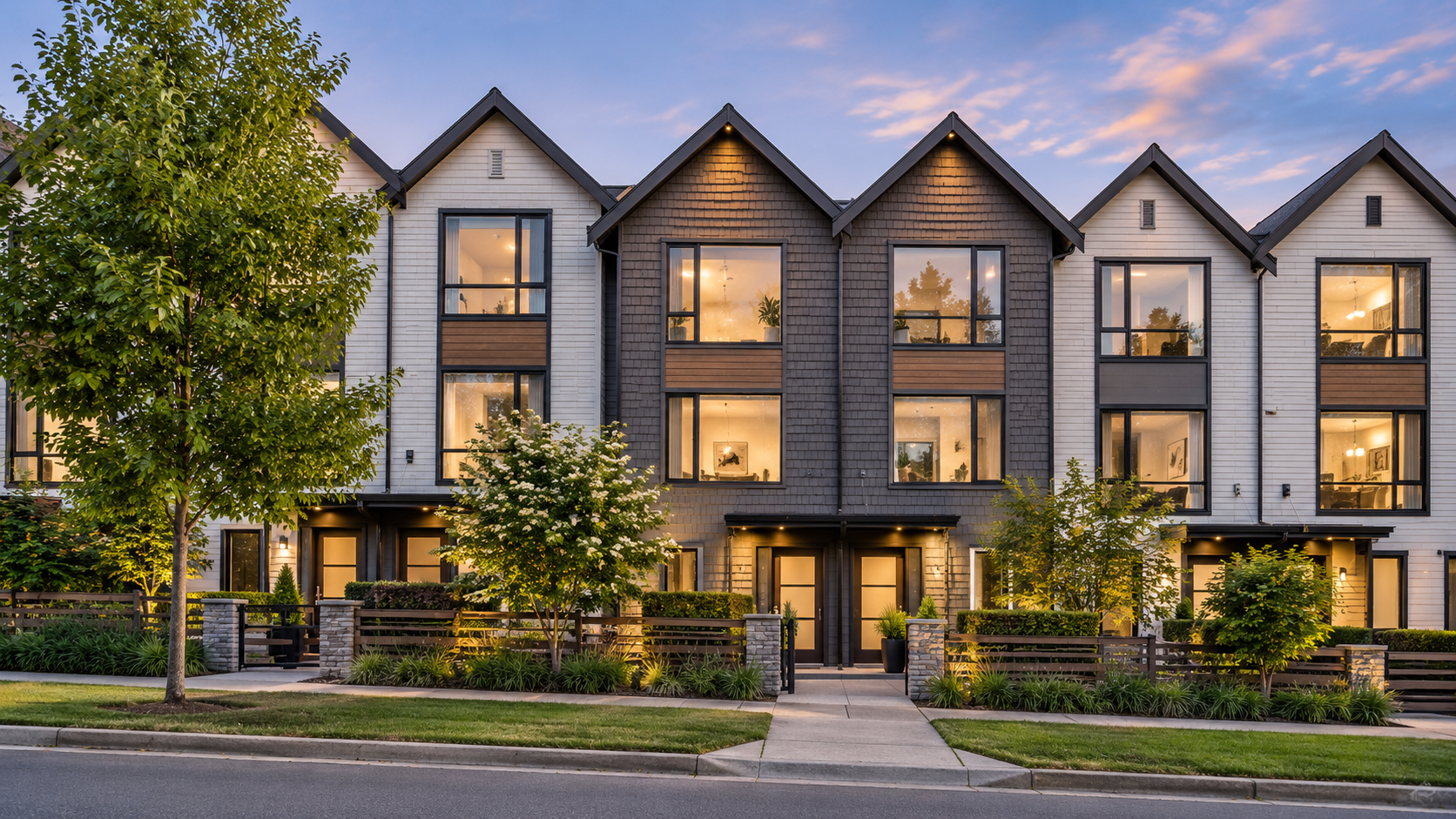
Real estate tips and guides for Cloverdale, Langley and South Surrey

Cloverdale, Langley & South Surrey, BC

Everything I've written for buyers and sellers in Cloverdale, Langley and South Surrey — market updates, buyer and seller tips, and guides to the neighbourhoods I work in. If you've got a question this doesn't answer, ask me directly and I'll help you find it.

RSS

Clayton Heights, Surrey, BC Schools and the Move-Up Window

Clayton Heights Secondary in Clayton Heights, Surrey, BC is enrolling at 33.4% above its built capacity, according to Surrey Schools' own figures. A funded 1,000-seat addition is scheduled to open in fall 2029. For a move-up parent weighing when to leave a townhouse, that single number changes the math more than almost anything else in this market.

The Number Behind the "Good Schools" Answer

Search for schools in this part of Surrey and you'll mostly get the same answer: family-friendly, good schools, close to parks. It's not wrong, but it isn't useful either — it doesn't tell you anything you can check.

Here's what you can check. Surrey Schools' own figures put current enrolment at Clayton Heights Secondary, in Surrey, BC, at 33.4% above the school's built capacity. That gap doesn't disappear on its own; it shows up as larger class sizes, more portables, tighter timetabling for electives, and less room to move a student between programs mid-year. Surrey Schools has funded a 1,000-seat addition to the building, and it's scheduled to be complete in fall 2029.

The pressure isn't limited to one building. Surrey Schools' 2025-26 five-year capital plan flags the broader Cloverdale/Clayton secondary catchment as at risk of reaching roughly 31% over capacity within the decade — a figure the district has already revised once, down from 38% the year before, so treat it as a moving projection rather than a fixed fact. The same capital planning projects district-wide secondary enrolment at 112.4% of capacity by 2035, against elementary at a comparatively modest 97.4% — the pressure is concentrated in secondary schools, not spread evenly across every grade. Those are planning-document numbers, not marketing copy, and they're the kind of detail that gets left out of a "good schools" paragraph because it takes more than a sentence to explain properly.

Sources: Surrey Schools — Clayton Heights addition, Surrey Schools 2027–28 capital plan, BC Government, 2025.

If you want addresses, grade ranges and programs for schools across the wider region without a ranking attached, the Fraser Valley Top Schools Guide is a good place to start.

Local Pressure Inside a District-Wide Decline

Here's the part that's easy to get wrong, and it matters if you want the full picture instead of a scary headline. Surrey Schools posted its first year-over-year enrolment decline in more than two decades for the 2025-26 school year — 76,977 K-12 students, down 871 (1.12%) from 77,848 the year before, in the September 30, 2025 count presented to the Board on October 9, 2025. The district attributes the drop mainly to federal immigration policy, temporary foreign worker permits, and families relocating, and the board expects roughly 800 fewer students per year for each of the next three years.

At the same time, the district's own five-year capital plans have continued, year after year, to flag the Cloverdale/Clayton, Surrey, BC secondary catchment as at risk of severe overcrowding — and are funding a major expansion at Clayton Heights Secondary specifically. The two facts aren't contradictory: a shrinking district total can still contain individual neighbourhoods running short of secondary seats. Clayton Heights Secondary, in Surrey, BC, is genuinely over capacity, and that's a real, checkable fact that affects real families right now, regardless of what the district total is doing elsewhere. The families who benefit most from getting this right are the ones deciding whether to buy inside the Clayton Heights catchment specifically, versus somewhere else in Cloverdale, Surrey, BC that isn't carrying the same enrolment pressure.

Sources: Surrey Schools — 2025-26 enrolment update, CBC News — Surrey school board on declining enrolment.

The Move-Up Window

Timing a move around a child's schooling in Clayton Heights, Surrey, BC isn't just about capacity — it's about which stage of school a family is in when the question actually comes up. Here's what I notice, though, from the buyers who sit across from me: most of the time clients just want to know which catchment the schools are in. In all the families I've worked with, I haven't had any specific questions about which is a bad school, which is a good school. That question simply doesn't come up the way you'd expect it to.

What buyers ask instead is practical, and it's usually about fit rather than rank. One school does get asked about by name: École Salish, and the reason is that it's newer — it opened in 2018, against 1993 for Lord Tweedsmuir and 1999 for Clayton Heights Secondary. People just want to know how it is, whether I've heard good things. That's curiosity about something unfamiliar, not a request for a league table.

Clayton Heights Secondary itself sits in a very central location, which is a large part of why its catchment is in demand.

Families who wait until after high school starts to make a move-up decision usually end up making it anyway, just later, with fewer homes to choose from and less runway to be selective about catchment.

That's the real shape of a move-up decision: it isn't about which school ranks higher, it's about which one fits the child you actually have, and that decision is easiest to make while your kids are still in elementary or middle school — before they've settled into a secondary and a move means pulling them out of it.

Why Families Move Up in the First Place

The trigger is rarely just "the school." It's usually the townhouse itself running out of room at the same time the kids are getting older. I hear the same details from move-up buyers over and over: they've outgrown the unit, school drop-offs happen from a place with no real yard, and often there's a dog that's simply gotten too big for townhouse living. The most common path I see is townhouse to detached, occasionally condo to townhouse first. School capacity is one input into that decision, not the whole decision — but it's the input people have the least real information about, which is exactly why it deserves a straight answer instead of a hedge.

Two Deadlines, One Year

There's a coincidence in this data worth pointing out, because it isn't actually a coincidence — it's two separate public agencies solving two separate capacity problems on roughly the same timeline. The Clayton Heights Secondary addition, in Surrey, BC, is due to complete in fall 2029. The Surrey–Langley SkyTrain extension, an Expo Line extension running along Fraser Highway and serving Cloverdale directly, is also set to open in late 2029. Construction is well underway — all eight stations are under active construction, guideway foundations are roughly 90% complete, and the elevated structure is already visible at stations like Fleetwood and Green Timbers.

Two of the biggest variables shaping this area over the next few years resolve in the same year. A family buying today with a plan to move up again, or a family weighing whether to wait, is really weighing a single window: what does this neighbourhood look like once both the school addition and the transit line are finished, versus what it looks like now, mid-construction, mid-overcapacity.

Sources: BC Gov project site, BC Gov release, May 2026, Surrey Now-Leader.

What This Means If You're Timing a Move

None of this is a reason to rush. It's the opposite — it's information that lets you make the decision on your own timeline instead of guessing.

A few things worth knowing before you start looking:

Check the catchment before you fall for the house. School catchment boundaries in Surrey don't always follow the lines you'd expect, and two homes a few blocks apart — say, one off Highway 15 near 188th Street and another closer to 72nd Avenue — can feed different schools entirely. Before you get attached to a listing, it's worth confirming which elementary, middle and secondary school actually serves that specific address — not just the neighbourhood name. My school catchment search tool lets you search Cloverdale, Surrey, BC homes by school catchment directly, so you can check the actual designated school before you fall for a house it may not feed into.

The market right now favours buyers who take their time. Surrey is currently a buyer's market — the sales-to-active-listings ratio sat at 10% in August 2026, active listings were up 9.4% year over year, and prices were down across every property type. That's not a reason to wait indefinitely, and it's not a reason to rush either. It's simply the current condition, and it means a move-up buyer generally has more room to be selective about catchment, layout and timing than they would in a tighter market. Source: FVREB Municipal Market Report, August 2026.

Cloverdale is reported as its own FVREB sub-area, separate from Surrey-Central. The commercial core along 176th Street and 64th Avenue is a short drive from most of the Clayton Heights catchment, and the Cloverdale detached benchmark sat at $1,339,700 in August 2026, down 6.3% year over year. FVREB reports Cloverdale separately from Surrey-Central, so the two are not interchangeable when you're comparing what your budget buys here against what it buys elsewhere in Surrey. Source: FVREB Municipal Market Report, August 2026.

Run the numbers before you assume you can't afford the move. A move from a townhouse to a detached home changes your payment, and it's worth seeing the real figure rather than an estimate in your head. My mortgage calculator is a starting point for that conversation.

Talk to someone before you commit to a plan either way. Whether the right move is this year, after the addition opens in 2029, or somewhere in between depends on your specific kids, your specific school, and your specific budget — not a general rule. My guide for buyers walks through the steps, and if you want to talk through what the Clayton Heights, Surrey, BC catchment specifically means for your situation, I'm glad to help you work through it.

If you're ready to see what's actually available in the catchment you're considering, you can browse Clayton Heights homes for sale, or current Cloverdale listings more broadly.

Frequently Asked Questions

Is Clayton Heights Secondary, Surrey, BC actually over capacity, or is that outdated?

Yes. Surrey Schools' own figures put Clayton Heights Secondary's current enrolment at 33.4% above its built capacity. Surrey Schools has funded a 1,000-seat addition to address this, scheduled to complete in fall 2029.

Does this mean Surrey schools overall are overcrowded?

No, and this is the distinction that matters. Surrey Schools recorded its first district-wide enrolment decline in more than two decades for 2025-26, and the board expects that decline to continue for the next three years. The pressure at Clayton Heights Secondary is a specific, local capacity issue that the district's own capital plans have flagged year after year — it doesn't mean Surrey schools generally are bursting.

When should a move-up family with young kids act on this information?

Elementary and middle-school years are typically when a move is still genuinely on the table. Once kids reach high school, most families I work with stop moving until graduation, then right-size. If school capacity is a factor in your decision, the easier window to make a move is before high school starts.

How do I find out which school actually serves a specific address in Clayton Heights, Surrey, BC?

Catchment boundaries don't always follow neighbourhood lines, and two nearby homes can feed different schools. It's worth confirming the exact elementary, middle and secondary catchment for a specific address before making an offer, rather than assuming based on the general area.

What else is changing in Clayton Heights, Surrey, BC around the same time as the school addition?

The Surrey–Langley SkyTrain extension, which runs along Fraser Highway and serves Cloverdale directly, is also scheduled to open in late 2029 — the same year as the Clayton Heights Secondary addition. Construction on both is well underway.

Is this a good time to buy in Cloverdale, Surrey, BC given the school situation?

Surrey is currently a buyer's market, with active listings up and prices down across property types as of August 2026. Cloverdale is reported as its own benchmark area, with a detached benchmark of $1,339,700 in August 2026. Whether it's the right time for your family depends on your budget, your kids' school stage and your own timeline — I'm happy to walk through what the numbers actually mean for your situation.

Related Reading

About the Author

Caroline Jeklin is a REALTOR® with Royal LePage Wolstencroft Realty, working with buyers and sellers throughout Cloverdale, Langley and South Surrey, BC. Since 2021, she has been part of 57 transactions across the Fraser Valley, working with clients from $302,000 to $4,200,000 (2021–2026, as of August 2026). Move-up families weighing school capacity against timing are some of the buyers she works with most often, and she's glad to talk through what a specific catchment actually means for a specific family before any decision gets made. Learn more about Caroline, or reach her directly at 604-319-5052 or caroline@carolinejeklin.com.

Read

What Homes Cost in Clayton Heights, Surrey, BC

Clayton Heights, Surrey, BC is the newest, densest quadrant of Cloverdale, which is itself a neighbourhood of Surrey, BC. No benchmark price is published for it, and none ever has been. What can be said honestly is the Cloverdale-wide number, and the housing mix that decides where a specific home sits inside it.

The Number Nobody Publishes for This Sub-Area

Start with the thing most area write-ups quietly skip.

The Fraser Valley Real Estate Board publishes MLS® Home Price Index benchmarks for the Cloverdale, Surrey, BC zone as a single reporting area. It does not break that zone into quadrants. There is no benchmark for Clayton Heights, Surrey, BC, no benchmark for East Cloverdale, Surrey, BC, no benchmark for West Cloverdale, Surrey, BC and no benchmark for Downtown Cloverdale, Surrey, BC. That is not a gap in this post — it is a fact about what gets measured.

So if a page hands you a tidy average for this quadrant, it was produced by someone, not published by anyone — a precision that does not exist, and a buyer who anchors on it is anchoring on nothing.

Two things are worth doing instead. Use the Cloverdale-wide figures for scale, knowing exactly what they cover. Then read the housing mix, because here the mix does more to set a price than the address does.

The Cloverdale, Surrey, BC Zone Figures, August 2026

These cover all four quadrants of Cloverdale, Surrey, BC together. They are not this sub-area's numbers.

SegmentBenchmark priceChange over one year
Composite$930,900−6.0%
Detached$1,339,700−6.3%
Townhouse$757,200−6.4%
Apartment$505,700−11.3%

Source: FVREB MLS® HPI, August 2026.

Two things in that table are worth pulling out.

Detached is the most resilient segment in the zone. Down 6.3% over the year, against 8.8% in Surrey-Central, 7.5% in South Surrey & White Rock and 8.3% across the Fraser Valley Board — a meaningfully smaller decline than every neighbouring zone.

Apartments are the weakest. Down 11.3% over the year, the softest apartment market anywhere in the board's table, while still sitting above Surrey-Central's apartment benchmark of $462,800. Expensive and falling fastest at the same time is an uncomfortable combination, and it is the honest read on that segment right now.

Across the Fraser Valley in August 2026 there were 941 MLS® sales, down 14% from July and up 1% year over year, and the sales-to-active-listings ratio sat at 10% against a balanced range of 12 to 20%. That is a buyer's market by the board's own measure — more choice, longer decisions, more room to negotiate subjects. It is a condition, not a countdown, and it will change when the ratio changes rather than on any date you can circle.

What the Housing Mix Tells You Instead

This is where a sub-area post can be genuinely useful without inventing a figure, because the stock here is unlike the rest of the neighbourhood.

Townhouses make up an unusually large share

Complexes built through the 2000s and 2010s are everywhere in this quadrant, in a way they simply are not in the older streets south of 64 Avenue. That matters for budgeting because the townhouse benchmark of $757,200 sits $582,500 below the detached benchmark of $1,339,700. A zone-wide composite figure blends both, so in an area weighted this heavily toward attached housing, the composite is a poor proxy for what most listings here actually ask.

If you are shopping strata, the listing price is only part of the cost. Monthly maintenance fees, the contingency reserve fund balance, any approved special levy and the depreciation report all belong in your budget before the offer, not after. In a complex fifteen or twenty years old, roofs, envelopes and rainscreening start landing in the minutes — the ordinary lifecycle of the building, and exactly what the strata documents exist to show you.

Detached homes are usually built with a suite

The typical detached house here was designed with a legal basement suite in mind, and a large share also have a coach house off the rear lane. The quadrant was master-planned as lane-served, higher-density housing rather than as a traditional subdivision, so this is the intended product, not a conversion.

That changes the arithmetic in a way a benchmark can never show. Two houses on the same street, one with a rented legal suite and one without, are not the same purchase and will not attract the same offers — the income is doing real work in the price. How much of that income a lender will count toward your qualification is a mortgage broker's question, and it is worth asking before you set a maximum rather than after.

Lots are small and the stock is young

Front yards are shallow, houses sit close together, and useable outdoor space is more often a rear patio than a yard. There is very little older housing. If your budget is aimed at land — a big yard, distance from the neighbour's fence, room for a trailer — this quadrant is not where it goes furthest, and the older streets in East Cloverdale, Surrey, BC or the larger lots in West Cloverdale, Surrey, BC are the more sensible comparison.

The other side of that is real too: newer roofs, windows, service panels and drainage. Older stock elsewhere in Cloverdale, Surrey, BC often carries a decade of deferred maintenance priced into nothing. Here, more of what you are buying is already done.

Who Buys Here, and Why

The buyers this quadrant was built for are move-up households stepping out of a townhouse and into a detached home, and in Clayton Heights, Surrey, BC that step almost always comes with a legal suite attached to it. The trade is lot size for newer construction and a mortgage helper — which is why the detached stock here sells on its rental income as much as on its square footage.

It also draws first-time buyers, because the townhouse supply gives them somewhere to start inside the neighbourhood they eventually want a house in, and households right sizing out of a larger, older home who want less yard but still want a detached house rather than a strata.

It suits you less if outdoor space is the point of the move, if you need to park a boat or a trailer, or if street parking in front of your own house would bother you. Suites and coach houses put more vehicles on each lot than the curb was designed for, and that varies block by block — easily checked by driving the street on a weekday at six in the evening rather than at a Sunday showing.

How This Quadrant Sits Against the Rest of the Neighbourhood

Without a published sub-area figure, the useful comparison is structural rather than numerical.

The older streets of East Cloverdale, Surrey, BC are mostly detached houses on smaller lots, many built without a full basement, which means fewer suites and more room at the curb. West Cloverdale, Surrey, BC runs to larger lots and a higher-end character. Downtown Cloverdale, Surrey, BC is the historic commercial core, roughly between 168 Street and 176 Street, with the oldest stock and the most walkable errands.

Against all three, this quadrant is the newest, the densest and the most heavily weighted toward attached housing and suited detached homes. That mix is what makes it, in practice, the more accessible way into a detached house in Cloverdale, Surrey, BC — not because the ground is cheaper, but because the product is different and the income is built in.

What Actually Moves the Price on a Specific Home

Zone benchmarks describe a typical property. Nobody buys a typical property. On a given listing in this quadrant, the things that move the number are concrete:

Whether the suite is legal, and whether it is tenanted. A permitted, occupied suite is income; an unpermitted one is a risk that belongs in your due diligence.

Whether there is a coach house. A second dwelling off the lane is a second income stream and a materially different property.

Which side of a main road it sits on. Homes fronting 72 Avenue or 188 Street live with traffic that homes two streets in do not. Fraser Highway carries the Surrey–Langley SkyTrain construction, and Highway 15 along the eastern edge carries the freight and border traffic north to Highway 1 and south to the crossing.

The block's parking reality. It is the complaint residents raise most, it is structural rather than incidental, and it varies enough street to street to show up in what a house sells for.

Catchment. Much of the area is served by Clayton Heights Secondary, and Surrey catchments are assigned by address rather than by neighbourhood — two homes a few blocks apart can feed different elementary schools. Confirm it for the specific address.

Strata health, for attached homes. Two identical floor plans in two different complexes are two different purchases once the depreciation report and the contingency reserve fund are on the table.

Getting a Real Number for a Real Home

A zone benchmark tells you the neighbourhood is down about 6% over the year. It does not tell you what to offer on the house you saw on Saturday. That answer comes from comparable sales on comparable stock — same form, same era, same suite arrangement, ideally the same few blocks.

To see what is currently listed, browse Clayton Heights homes for sale, or widen it to Cloverdale, Surrey, BC homes for sale. For a figure on one specific home instead of a zone average, call 604-319-5052 or email caroline@carolinejeklin.com. If you are earlier in the process, the guide for buyers walks through the steps, and the mortgage calculator is a reasonable place to sanity-check a payment before you fall for a listing.

Frequently Asked Questions

Is there a published benchmark price for Clayton Heights, Surrey, BC?

No, and there never has been. The Fraser Valley Real Estate Board reports Cloverdale, Surrey, BC as one zone and does not publish quadrant-level benchmarks. Any precise figure quoted for this sub-area has been estimated by whoever published it. The available published numbers are Cloverdale-wide: as of August 2026, a composite benchmark of $930,900, down 6.0% year over year, and a detached benchmark of $1,339,700, down 6.3%.

Are home prices in Clayton Heights, Surrey, BC rising or falling?

The honest answer is at the zone level only. Across Cloverdale, Surrey, BC in August 2026, every property type was down year over year: composite −6.0%, detached −6.3%, townhouse −6.4% and apartment −11.3%. Fraser Valley-wide, 941 MLS® sales in the month were down 14% from July and up 1% year over year, with a sales-to-active-listings ratio of 10% against a balanced range of 12 to 20%. That is a buyer's market by the board's own measure.

What is the most affordable way into a detached home in Clayton Heights, Surrey, BC?

Usually a detached house with a legal basement suite, which is the standard product here rather than the exception, and sometimes a coach house off the rear lane as well. The rental income is part of what makes the payment work for a move-up family. How much of that income a lender will count toward your qualification varies by lender and by file, so confirm it with a mortgage broker before you set your maximum.

How does a legal suite change what a home is worth in Clayton Heights, Surrey, BC?

It changes the buyer pool, and with it the price. A permitted, tenanted suite makes the house partly an income property, which brings in buyers who are underwriting it as one. An unpermitted suite does the opposite: it introduces a compliance question and belongs squarely in your subjects. Confirm the permit status with the City of Surrey rather than relying on how the listing describes it.

Is Clayton Heights, Surrey, BC cheaper than the rest of Cloverdale, Surrey, BC?

There is no published figure that can answer that, and anyone who gives you one has made it up. What is true is structural: this quadrant carries far more townhouses and suited detached homes than the older streets elsewhere in the neighbourhood, on smaller lots and with newer construction. That mix generally makes the entry point into a detached home more accessible here, without saying anything about the price per square foot of the land.

What should a buyer budget for beyond the purchase price here?

For strata purchases, the monthly maintenance fee, the contingency reserve fund balance, any approved special levy and whatever the depreciation report flags in the next few years. For detached homes with a suite or coach house, budget for the landlord side: insurance, vacancy, and the costs of being a landlord even when the income is reliable. Property transfer tax, legal fees and a home inspection apply either way, and for figures on your own situation a mortgage broker and a lawyer or notary are the right people to ask.

Related Reading

About the Author

Caroline Jeklin is a REALTOR® with Royal LePage Wolstencroft Realty, licensed since 2021, and a recipient of the Royal LePage President's Gold Award in 2025 — an award given to the top 6 to 10% of agents in her local marketplace. Between 2021 and 2026 she has been part of 57 transactions across the Fraser Valley, ranging from $302,000 to $4,200,000, as of August 2026. Because no benchmark is published below the Cloverdale, Surrey, BC zone, the price question in this quadrant is really a question about comparable sales on the specific block and the specific form of housing — which is the version of it she can actually answer. Read more about Caroline Jeklin, or reach her at 604-319-5052 or caroline@carolinejeklin.com.

Read

Living in Clayton Heights, Surrey, BC: What the Area Is Actually Like

Clayton Heights, Surrey, BC is the newest and densest quadrant of Cloverdale, Surrey, BC — townhouses, coach houses and suited detached homes built mostly since the early 2000s, spread north and east of 72 Avenue toward Highway 15. Whether that reads to you as cramped or as very good value depends almost entirely on where you're arriving from.

The Same Area, Two Completely Opposite Verdicts

Read what residents say about this area online and you'll find two versions of it that barely sound like the same place.

In conversations centred on Langley Township, BC, the picture is consistently tight, and parking comes up more than anything else by a wide margin. The mechanism gets explained the same way every time: nearly every lot carries a basement suite, many also a coach house at the back, garages end up used for storage, so the cars go to the street. One long-time owner near 196 Street and 72 Avenue described parking three or four blocks from home if they weren't back by 4:30.

In conversations centred on Surrey, the same area comes back as a straightforward win — family-oriented, close to the highways and to groceries, trails and duck ponds within walking distance.

Neither group is wrong. They're running different comparisons.

Measured against Walnut Grove or Brookswood in Langley Township, BC — bigger lots, more single-family stock, fewer suites per block — Clayton Heights, Surrey, BC looks dense and short on parking. Measured against most of the rest of Surrey, the same streets look newer, quieter and better set up for a young family. The useful question isn't which verdict is true; it's which comparison you're actually running.

Here's something I run into constantly. On paper this isn't a separate community at all — administratively it sits underneath Cloverdale, Surrey, BC, and you'll often see the parent neighbourhood name printed in front of it on a listing. But almost nobody searches that way. Buyers type the area name on its own, as though it were its own town, then weigh it against whatever happened to surface beside it — frequently somewhere in Langley Township, BC with a completely different lot size and era of construction. So the first thing I do is slow that down and ask what they're really comparing it against. The label they searched under is doing more work in their head than they realize, and it's usually why two people tour the same street and come away with opposite impressions.

What the Housing Stock Actually Is

This is the youngest part of the neighbourhood, and the housing reflects that.

Townhouses are everywhere. Complexes built through the 2000s and 2010s make up a large share of the stock, and they're why so many first-time buyers and young families land here.

Detached homes are usually suited. The typical detached house in Clayton Heights, Surrey, BC was built with a legal basement suite in mind, and many also have a coach house — a small separate dwelling above or behind the garage, off the rear lane. That's by design: the area was planned as a higher-density, lane-served neighbourhood rather than a traditional subdivision.

Lots are small. Front yards are shallow, houses sit close together, and much of the useable outdoor space is a rear patio rather than a yard.

Almost nothing is old. If you want a 1970s rancher on a quarter-acre, this is the wrong quadrant — it simply isn't what was built here.

The suites and coach houses are the most important thing to understand here, because they explain both the biggest advantage and the biggest complaint. A mortgage-helper suite is genuinely life-changing for a family stretching into a detached home. That same suite also means three or four vehicles on a lot serviced as if it were one household. You don't get one without the other.

Who the Area Suits

The clearest fit is the move-up family: people who've outgrown a townhouse, doing school drop-offs from a place with no real yard, often with a dog that's gotten too big for it. Townhouse to detached is the most common path I see, and this is one of the few parts of Cloverdale, Surrey, BC where that step exists at a range of price points rather than one. It also suits buyers who want newer systems and no renovation ahead of them, and households who want rental income built into the purchase.

It suits you less if outdoor space is the point of moving, if you need to park a trailer or a boat, or if street parking in front of your own house would genuinely bother you — all easier to judge on a weekday evening than at a Sunday showing.

Schools, and One Number Worth Knowing

Much of Clayton Heights, Surrey, BC is served by Clayton Heights Secondary, and there's a specific, checkable fact about that school most area write-ups skip. Surrey Schools' own figures put its current enrolment at 33.4% above its built capacity. Surrey Schools has funded a 1,000-seat addition, scheduled to complete in fall 2029.

That's a capacity figure, not a judgement about the school. Enrolment pressure shows up as portables, larger classes and tighter timetabling; it says nothing about teaching. It's worth knowing because it never appears in a listing.

For context, Surrey Schools' capital planning flags the wider secondary catchment covering this part of Cloverdale, Surrey, BC as at risk of running roughly 31% over capacity within the decade — while district-wide, Surrey is now planning around declining overall enrolment. The honest framing is local pressure inside a district-wide decline, not a district in crisis.

Catchments here also don't follow the boundaries you'd expect: two homes a few blocks apart, one nearer 188 Street and one nearer 72 Avenue, can feed different elementary schools. Confirm the catchment for the address before you get attached to the house.

Sources: Surrey Schools — Clayton Heights addition, Surrey Schools 2027–28 capital plan, CTV News on district enrolment.

Parks, Errands and Everyday Amenities

Because the area was master-planned rather than grown piecemeal, greenways and small parks are threaded through the residential blocks rather than gathered into one large central park. Residents commonly describe trails and ponds within walking distance. That walkability is real, but it's community walking rather than errand walking — errands involve the car.

For groceries, residents describe a five-to-ten-minute drive to a cluster including Superstore, T&T and H Mart, with the commercial core of Cloverdale, Surrey, BC around 176 Street and 64 Avenue a short drive south.

One quirk catches new arrivals: this is a Surrey address, even though the Langley Township, BC line is minutes away. Municipal recreation programmes generally give their own residents priority registration, so a family assuming they'll sign up for swimming lessons at the nearest Langley Township, BC recreation centre can end up at the back of the queue. Check the rules for that facility first.

Getting Around

Highway access is the standout, and it's what residents name most often when they explain why they'd stay. Highway 15 runs along the eastern edge, giving direct access south to the border crossing and north to Highway 1. Fraser Highway is the main east–west artery, toward Langley Township, BC in one direction and the rest of Surrey in the other. Internally, 72 Avenue and 188 Street are the main routes, and 64 Avenue connects south into the rest of Cloverdale, Surrey, BC.

The trade-off is that those same routes carry the traffic, and Surrey–Langley SkyTrain construction is a daily factor residents name as a genuine irritation.

The Surrey–Langley SkyTrain

The 16-kilometre Expo Line extension runs along Fraser Highway from King George to 203 Street, with eight stations, and it explicitly serves Cloverdale, Surrey, BC. It is scheduled to open in late 2029.

As of mid-2026 it is well past the paper stage: all eight stations are under construction, guideway foundations are roughly 90% complete, about 75% of the columns are built, and more than 30% of the guideway segments are installed. Above-ground structure is already visible at Fleetwood and Green Timbers.

Practically, anyone buying here today is buying into several more years of construction, and anyone thinking past that is looking at a different transit picture than the one they'd drive through this week. Both are worth weighing; neither is a reason to hurry. The school addition lands the same year, which makes 2029 an unusually meaningful date here.

Sources: Surrey–Langley SkyTrain project site, BC Government release, 14 May 2026, Surrey Now-Leader, 14 May 2026.

The Honest Trade-Offs

Parking is the number-one complaint, and it's structural. Suites and coach houses on lots serviced as single-family means more vehicles than curb. It varies block to block, and it's the easiest thing to check before you buy — drive the street at 6pm on a weekday, not 1pm on a Saturday.

Density is the point, not an accident. If you've been living on a 9,000-square-foot lot, you will feel it on day one.

Construction traffic is temporary but not brief. Late 2029 is the transit date.

Property upkeep varies. Residents report illegal dumping and mail theft as recurring annoyances. Worth asking a neighbour about the specific block.

None of that makes it a bad place to live. The strongest voices in the resident conversations are the positive ones, and the most balanced summary anyone offered was that the area is what you make of it. It's a place with one dominant, concrete issue an informed buyer can largely choose around, block by block.

What Homes Cost Here

Plainly: no benchmark price is published for this sub-area, and none ever has been. The Fraser Valley Real Estate Board reports benchmarks for the Cloverdale, Surrey, BC zone as a whole, covering all four quadrants together. Anyone quoting a precise figure for this sub-area is estimating.

For scale, the Cloverdale-wide figures for August 2026 were a detached benchmark of $1,339,700 (down 6.3% year over year) and a townhouse benchmark of $757,200 (down 6.4%) — neighbourhood-wide numbers, not sub-area numbers. Across the Fraser Valley, the sales-to-active-listings ratio sat at 10% in August 2026, against a balanced range of 12–20%. Source: FVREB Municipal Market Report, August 2026.

What can be said honestly without a number is the mix: this quadrant skews newer, denser and far more heavily toward townhouses and suited detached homes than the rest of the neighbourhood. That mix makes it the more accessible entry point into a detached home here, and it drives what you'll pay more than the address does.

To see what's currently listed, browse Clayton Heights homes for sale, or widen it to Cloverdale, Surrey, BC homes for sale. For a figure on a specific home rather than a zone average, call 604-319-5052 or email caroline@carolinejeklin.com; my guide for buyers walks through the steps.

Frequently Asked Questions

Is Clayton Heights, Surrey, BC a good place to live?

For most young families it is, with one caveat. Residents consistently describe it as family-oriented, with good highway access, newer homes and trails close by. The dominant complaint is street parking, a structural result of basement suites and coach houses on lots serviced as single-family. Whether that's a dealbreaker depends far more on what you're comparing it against than on the area itself.

Why do some people say Clayton Heights, Surrey, BC feels cramped while others rate it highly?

Because they're using different comparison sets. Buyers arriving from Walnut Grove or Brookswood in Langley Township, BC are used to larger lots and fewer suites per block, so the density and parking stand out immediately. Buyers comparing against other parts of Surrey see a newer, family-oriented area with easy access to Highway 15 and Fraser Highway. Both readings are accurate from where each person stands.

What kind of homes are in Clayton Heights, Surrey, BC?

Mostly newer stock built from the early 2000s onward: a large supply of townhouses, plus detached homes typically designed with a legal basement suite and often a coach house off the rear lane. Lots are small, yards are modest, and there is very little older housing — a planned, lane-served, higher-density neighbourhood rather than a traditional subdivision.

Is parking really a problem in Clayton Heights, Surrey, BC?

It's the most frequently raised issue by residents, and the cause is consistent: suites and coach houses put more vehicles on each lot than the street was designed for, and garages often end up used for storage. It varies significantly block to block, so the practical check is to drive the street on a weekday around dinner time rather than at a weekend showing.

What will the Surrey–Langley SkyTrain mean for Clayton Heights, Surrey, BC?

The extension runs along Fraser Highway, the area's main east–west artery, and is scheduled to open in late 2029. Until then, construction traffic on that corridor is a real day-to-day factor residents raise often. As of mid-2026 all eight stations are under construction, guideway foundations are roughly 90% complete and about 30% of guideway segments are installed.

Related Reading

About the Author

Cloverdale, Surrey, BC is the area Caroline Jeklin knows best, and its four quadrants are where most of her buyer conversations start. A REALTOR® with Royal LePage Wolstencroft Realty, she has been part of 57 transactions across the Fraser Valley since 2021, with clients ranging from $302,000 to $4,200,000 (2021–2026, as of August 2026), and received the Royal LePage President's Gold Award in 2025, awarded to the top 6–10% of agents in her local marketplace. Helping a buyer work out which neighbourhood they're really comparing against is usually the most useful hour of the whole search. Learn more about Caroline Jeklin, or reach her at 604-319-5052 or caroline@carolinejeklin.com.

Read
Reciprocity Logo The data relating to real estate on this website comes in part from the MLS® Reciprocity program of either the Greater Vancouver REALTORS® (GVR), the Fraser Valley Real Estate Board (FVREB) or the Chilliwack and District Real Estate Board (CADREB). Real estate listings held by participating real estate firms are marked with the MLS® logo and detailed information about the listing includes the name of the listing agent. This representation is based in whole or part on data generated by either the GVR, the FVREB or the CADREB which assumes no responsibility for its accuracy. The materials contained on this page may not be reproduced without the express written consent of either the GVR, the FVREB or the CADREB.