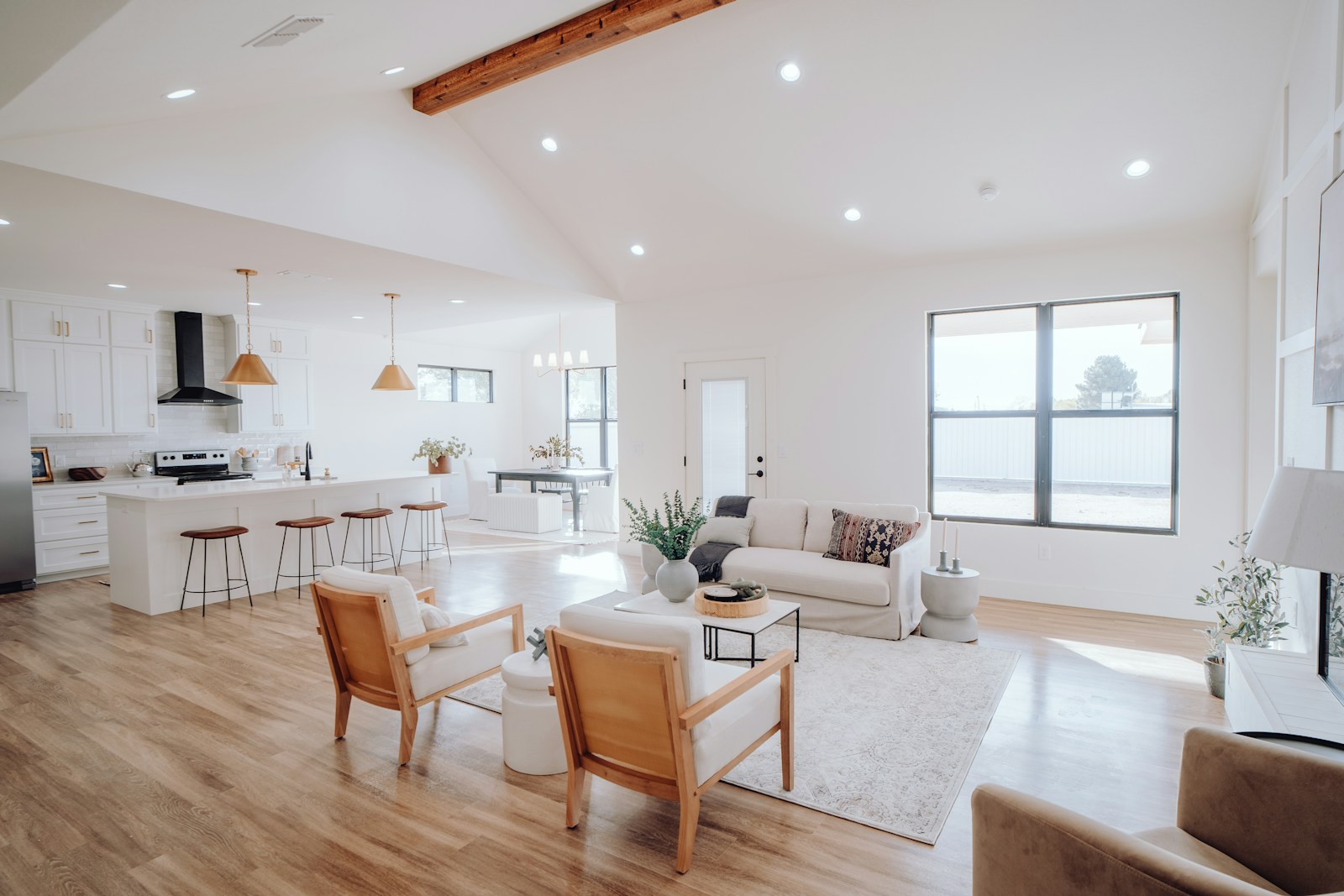
Cloverdale, Surrey, BC isn't one price. The detached benchmark across Cloverdale sits at $1,339,700 as of August 2026, but that single number hides four very different quadrants — West Cloverdale, East Cloverdale, Clayton Heights and Downtown Cloverdale, all in Surrey, BC — and the same budget lands you in a different kind of home in each one.
Cloverdale, Surrey, BC is its own market — and most sources don't know it
Here's something most cost-of-living content gets wrong before it even starts: Surrey-Cloverdale is its own reporting sub-area in the Fraser Valley Real Estate Board's (FVREB) statistics, tracked separately from Surrey-Central and Surrey-North. When a site quotes "Surrey home prices," it's usually quoting a blended number that folds Cloverdale in with neighbourhoods that behave nothing like it. That's why a general Surrey cost-of-living page can't answer the question a Cloverdale buyer is actually asking.
The August 2026 numbers, from the FVREB Municipal Market Report, show why the distinction matters:
Detached: Cloverdale benchmark $1,339,700, down 6.3% year over year. Surrey-Central benchmark: $1,322,800, down 8.8%. Cloverdale detached carries a small premium — about $16,900 — over Surrey-Central, while declining at a meaningfully slower rate.
Townhouse: Cloverdale benchmark $757,200, down 6.4% year over year — just above Surrey-Central's $748,000, which is down 5.9%. This is the segment where the two track each other most closely, in both price and direction.
Apartment: Cloverdale benchmark $505,700 — $42,900 more than the Surrey-Central benchmark of $462,800, and falling faster too: down 11.3% year over year against Surrey-Central's 11.2%.
That apartment line is worth sitting with — it turns out to be the more interesting story than the detached numbers above it. In Cloverdale, both the detached benchmark and the apartment benchmark carry a premium over Surrey-Central: this isn't a market where houses are the discount option and condos cost more, it's a market where everything costs a bit more. The apartment segment is also the weakest performer anywhere in the FVREB table, falling faster than any other property type tracked. I don't see that combination — priciest and falling fastest — anywhere else in the Fraser Valley I work in, and it changes the math for anyone assuming a Cloverdale condo is the safe, stable entry point. Here, it isn't.
The market conditions behind those numbers
August 2026 is a buyer's market across Surrey — every FVREB benchmark is down year over year, and the sales-to-active-listings ratio sits at 10%, which CREA classifies as favouring buyers. Months of supply is at 8.8, meaning it would take almost nine months to sell through everything currently listed at the current pace of sales. Sales were down 8.0% year over year while active listings rose 9.4%.
None of that is a reason to move faster than you're ready to. It's the honest backdrop for the number I get asked most often: given what I have to spend, what does that actually get me, quadrant by quadrant?
Sales-to-list ratio and days on market — worth knowing before you set a budget
Two more numbers help you read the market accurately. Surrey's sales-to-list ratio was 97% in the August 2026 reporting period, meaning homes are, on average, selling close to their asking price rather than well under it — a buyer's market here doesn't automatically mean deep discounts off list. Days on market is where the sources genuinely disagree, so I'll give you both rather than pick one and hope you don't notice: CREA reports a 40-day average for detached homes and townhouses and 46 days for condos across the whole Fraser Valley board area (August 2026), while Straw Homes reports a 24-day median specifically for Surrey (August 2026, reporting July data). Those are different measures — mean versus median — over different geographies, so don't average them together or treat them as interchangeable.
Benchmark price isn't the same number you'll see everywhere
The $1,339,700, $757,200 and $505,700 figures above are FVREB's benchmark prices — a hedonic model that adjusts for the mix and features of what actually sold, which is why real estate boards use it as the standard measure. You'll also see average sold prices quoted elsewhere, usually for Surrey as a whole. Those averages blend every property type and every sub-area into one number, which is a different measurement than the zone-level benchmarks above — worth knowing so you're not comparing two different tools and assuming one of them is wrong.
What your budget buys, quadrant by quadrant
Cloverdale, Surrey, BC doesn't have FVREB pricing broken out by quadrant — the benchmark above is the Cloverdale-wide number, and nobody publishes West-vs-East-vs-Clayton Heights-vs-Downtown benchmarks separately. What I can tell you, from working inside all four, is what that same budget tends to trade for once you're on the ground.
West Cloverdale, Surrey, BC
When I take a buyer just west of 168th, the first thing they notice is how much more room there is between houses. West Cloverdale carries Agricultural Land Reserve (ALR) land along 64th Avenue and 152nd Street, and that geography shapes everything around it — lots run bigger, houses run bigger, and streets stay quiet because the land itself limits how densely it can be built out. It's the higher-end pocket of Cloverdale, Surrey, BC: larger homes, more separation from neighbours, and a price that reflects both. A buyer with a Cloverdale-benchmark budget who wants that space should expect to compete for it — here, your dollar buys land and distance, not square footage efficiency. It's why West Cloverdale reads as the "OG" side of the neighbourhood to people who've lived here a while.
East Cloverdale, Surrey, BC
North of 64th Avenue, the lots tighten up. Homes in East Cloverdale, Surrey, BC sit closer together than in West Cloverdale, on smaller footprints, with a noticeably higher concentration of parks woven through the residential streets. For a buyer working the same overall budget, that compactness is what buys back affordability elsewhere in the deal — a newer or larger house, or simply less competition for it, versus stretching for the ALR-adjacent lots to the west. It reads as the more efficient dollar-per-square-foot side of Cloverdale, Surrey, BC without giving up walkable green space.
Clayton Heights, Surrey, BC
Clayton Heights technically nests under the Cloverdale umbrella — Surrey groups it as "Cloverdale Clayton Heights" — but buyers search it as its own neighbourhood, and it behaves like one. It's newer construction on the whole, family-dense, and growing fast enough that Surrey Schools' own figures put Clayton Heights Secondary's enrolment at 33.4% above its built capacity, with a funded 1,000-seat addition due to complete in fall 2029. That's not a knock on the schools; it's a sign of how quickly the area has filled in with young families, which is exactly the demand pushing prices for newer Clayton Heights product toward the upper end of what a Cloverdale-wide budget will stretch to. If your number is closer to the detached benchmark than above it, be ready for less negotiating room here than in the older housing stock elsewhere in Cloverdale.
Downtown Cloverdale, Surrey, BC
Downtown Cloverdale runs roughly 168th Street to 176th Street — the main middle ground of the neighbourhood, and a genuinely desirable stretch to buyers who want walkable amenities without paying West Cloverdale, Surrey, BC's premium for land. It's the transitional zone: older character homes mixed with newer infill, closer to the shops and services along the Cloverdale, Surrey, BC core than either East or West. For a mid-range Cloverdale budget, Downtown is often where buyers land when West is out of reach and East's compact lots aren't the priority — it's the part of the neighbourhood built for balance rather than a specific extreme.
One more variable: the timeline, not just the price
Budget decisions in Cloverdale, Surrey, BC right now sit alongside a construction timeline worth knowing about. The Surrey-Langley SkyTrain extension along Fraser Highway is under construction at all eight stations, with guideway foundations roughly 90% complete and more than 30% of guideway segments installed as of August 2026. It's set to open in late 2029, connecting Cloverdale toward King George station and City Centre. That's an awareness point, not a reason to rush a decision either direction — buyers weighing a longer hold in a quadrant closer to the future line, and sellers weighing whether to list now or wait, are both making a real timing call, and late 2029 is the honest number to plan around rather than a vague "a few years out."
So where does your budget actually land?
Put together, the pattern looks like this: West Cloverdale, Surrey, BC asks a premium for land and quiet. East Cloverdale, Surrey, BC trades lot size for compactness and parks, at a more accessible price point. Clayton Heights, Surrey, BC commands a premium for newer builds and space to grow a family, with school capacity now catching up to the demand. Downtown Cloverdale, Surrey, BC sits in the middle — walkable, mixed-vintage, and often the most flexible option for a buyer who hasn't ruled anything out yet.
Every one of those trade-offs is easier to see in person than on a page. Benchmark prices tell you what a quadrant costs on average; they don't tell you what a specific 1,450-square-foot rancher on a specific East Cloverdale street is actually worth this month, or whether the newer build you're eyeing in Clayton Heights is priced against comparable inventory or against wishful thinking. That's the part worth a conversation before you commit a number to any one quadrant.
None of that replaces running your own numbers. If you want to see what a mortgage in Cloverdale, Surrey, BC actually costs monthly at today's rates, my mortgage calculator will get you a real estimate in a couple of minutes. If you're weighing whether to sell in one quadrant and buy in another, a free home evaluation is the honest starting point — it tells you what your current property is actually worth in this market, not what it was worth two years ago.
If you'd rather just see what's live right now across all four quadrants, browse current Cloverdale homes for sale and I can walk you through what's realistic for your budget from there.
Frequently Asked Questions
What's the benchmark price for a detached home in Cloverdale, Surrey, BC right now?
As of August 2026, the FVREB benchmark price for a detached home in the Surrey-Cloverdale sub-area is $1,339,700, down 6.3% year over year. That's a small premium — about $16,900 — over the Surrey-Central detached benchmark of $1,322,800, and Cloverdale's price is falling at a meaningfully slower rate than Surrey-Central's.
Why do apartments in Cloverdale cost more than the Surrey-Central benchmark?
The August 2026 FVREB benchmark for a Cloverdale apartment is $505,700, which is $42,900 higher than the Surrey-Central apartment benchmark of $462,800 — and falling faster too, down 11.3% year over year against Surrey-Central's 11.2%. Cloverdale's detached homes also carry a premium over Surrey-Central, not a discount: both property types cost more here, and the apartment segment is the weakest performer in the entire FVREB table. That's a reason not to assume a condo budget stretches further in Cloverdale than it would elsewhere.
Which Cloverdale, Surrey, BC quadrant costs the least for a detached home?
FVREB doesn't publish separate benchmark prices by quadrant, only for Cloverdale as a whole. In practice, East Cloverdale, Surrey, BC's more compact lots north of 64th Avenue tend to be the more accessible entry point for detached buyers, while West Cloverdale's larger, ALR-adjacent lots and Clayton Heights' newer construction both command a premium.
Is Cloverdale, Surrey, BC a buyer's market right now?
Yes. As of August 2026, Surrey's sales-to-active-listings ratio was 10%, which CREA classifies as a buyer's market, with 8.8 months of supply and sales down 8.0% year over year while active listings rose 9.4%. Every FVREB benchmark price across Cloverdale was down year over year in the same report.
What does a townhouse budget buy in Cloverdale versus the Surrey-Central benchmark?
The August 2026 FVREB townhouse benchmark for Cloverdale is $757,200, just above the Surrey-Central benchmark of $748,000. It's the property type where Cloverdale and Surrey-Central track closest together, unlike the wider gaps seen in detached and apartment pricing.
How is West Cloverdale, Surrey, BC different from the rest of the neighbourhood?
West Cloverdale, Surrey, BC borders Agricultural Land Reserve (ALR) land along 64th Avenue and 152nd Street, just west of 168th Street. That geography keeps lots larger and streets quieter than the rest of Cloverdale, Surrey, BC, and it's generally considered the higher-end pocket of the neighbourhood.
Related Reading
Is Cloverdale, Surrey, BC a Good Place to Live? Pros and Cons
Best Neighbourhoods in Cloverdale, Surrey, BC: A Quadrant Guide
About the Author
Caroline Jeklin is a REALTOR® with Royal LePage Wolstencroft Realty who lives and works in Cloverdale, Surrey, BC. Before real estate, she spent seven years in development and construction — a background that shapes how she reads what a home is actually worth, not just what it's listed for. Since 2021, she's been part of 57 transactions across the Fraser Valley, working with buyers and sellers from $302,000 to $4.2 million (2021–2026, as of August 2026). Because she lives in the neighbourhood herself, she spends a lot of her working week moving between its four quadrants with buyers who are trying to figure out exactly what's covered in this post — what their number actually buys once they're standing in front of a specific house on a specific street. Reach her at 604-319-5052 or caroline@carolinejeklin.com, or learn more about her at about Caroline Jeklin.

 The data relating to real estate on this website comes in part from the MLS® Reciprocity program of either the Greater Vancouver REALTORS® (GVR), the Fraser Valley Real Estate Board (FVREB) or the Chilliwack and District Real Estate Board (CADREB). Real estate listings held by participating real estate firms are marked with the MLS® logo and detailed information about the listing includes the name of the listing agent. This representation is based in whole or part on data generated by either the GVR, the FVREB or the CADREB which assumes no responsibility for its accuracy. The materials contained on this page may not be reproduced without the express written consent of either the GVR, the FVREB or the CADREB.
Comments:
Post Your Comment: