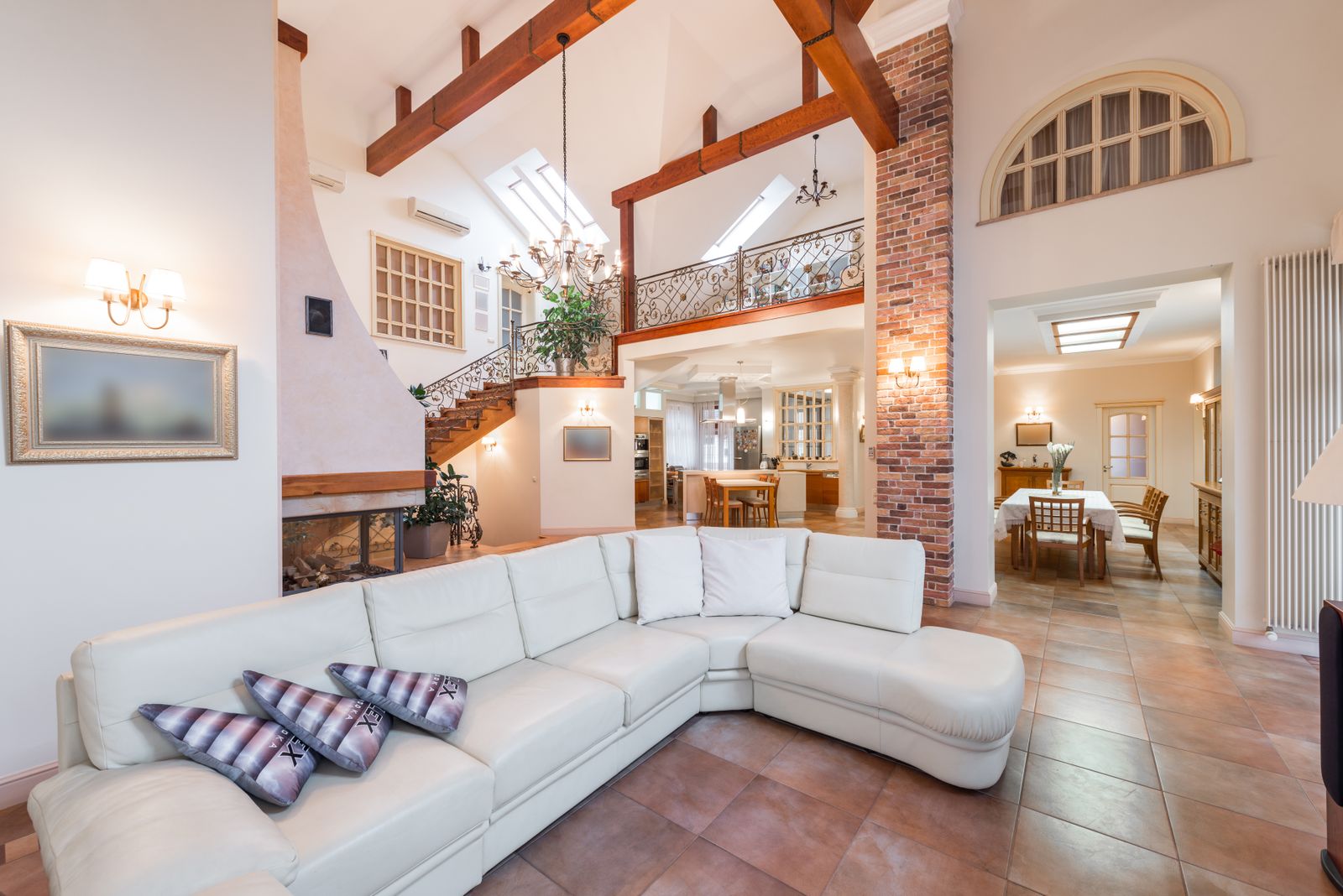
Langley Township, BC is a good place to live if you want established neighbourhoods, larger lots and more space for your money, and can live with car dependency and prices that are still falling. The detached benchmark price is $1,479,400 (FVREB, August 2026) — the priciest of the three Fraser Valley markets I track. Here's the honest version.
First, the thing a forum thread can't tell you
Most of what's written about living here comes from residents, and much of it is useful — they know the traffic on 200 Street at 5pm better than any market report does. But one thing that conversation almost never gets right shows up on your tax bill and in your services for as long as you own the house.
Langley Township, BC and Langley City, BC are two separate municipalities. Not a town and its downtown. Each has its own council, its own budget, its own bylaws, its own tax rate and its own services. The Township surrounds the City and contains Brookswood, Murrayville, Walnut Grove, Salmon River, Fort Langley, Willoughby, Willowbrook, Aldergrove, Campbell Valley, the Otter District and Milner. Langley City is a compact core of roughly 10 km² around the Langley Bypass, Fraser Highway and Douglas Crescent, and it contains none of those communities.
So when someone tells you it's great, or that it's a nightmare, the first honest question is which of the two they mean. This post is about the Township.
One more thing up front, because it shapes the price side of everything below. The Fraser Valley Real Estate Board reports the Township and the City together as a single zone. There is no published Township-only benchmark price, and none for Brookswood, Murrayville, Walnut Grove or any other individual community. Anyone quoting you a neighbourhood-level "average price" here is estimating.
The pros
1. Established neighbourhoods on genuinely larger lots
This is the main reason buyers cross into the Township from Surrey, and it's real. Large parts of it were built out decades before the current wave of subdivisions, on lots simply bigger than what's built now. In Brookswood, Langley Township, BC, lots of 9,000 to 10,000 square feet are common, against roughly 4,000 square feet for much of the comparable newer housing in Cloverdale, Surrey, BC. More than double the ground — the difference between a yard you use and a yard you look at.
That space is also why detached workshops, RV parking and mature trees are ordinary here rather than a feature line in a listing. If you've been looking at newer detached homes and wondering why the houses keep getting bigger while the yards keep getting smaller, this is the market where that reverses.
2. It isn't one place, and that's an advantage
Eleven distinct communities sit inside one municipality, and they're genuinely different. Walnut Grove, Langley Township, BC sits north of Highway 1 with fast freeway access. Willoughby, Langley Township, BC is the newest and densest, still under construction. Salmon River, Langley Township, BC is acreage country, on well and septic rather than municipal servicing. Fort Langley, Langley Township, BC is a small historic village on the river. Aldergrove, Langley Township, BC sits at the eastern end.
Practically, a "no" to the Township is usually a "no" to one community, not the municipality. I've had buyers write off the whole area after touring two streets in the wrong part of it, when what they wanted was eight minutes away.
3. Conditions currently favour buyers, and that's measurable
Across the Fraser Valley in August 2026, the sales-to-active-listings ratio was 10%. Balanced is 12% to 20%, so the region sat just under balance, on the buyer's side of it — with 941 total MLS® sales, up 1% year over year (FVREB, August 2026). Prices fell across every zone and every property type in that report.
For a buyer that's a genuine pro, of the least glamorous kind: more inventory, more time, more room to write conditions into an offer instead of stripping them out to win. I won't attach a deadline to it, because nobody knows when it ends. I'll just name the condition — taking your time costs you less here than it did three years ago.
4. Townhouses here have held up better than anything else in the region
Of every segment in the FVREB August 2026 table — every zone, every property type — the combined Langley Township, BC and Langley City, BC zone's townhouses declined among the least, at −5.0%, with a benchmark of $806,400. Detached fell 7.1%, apartments fell 8.8%, and the composite fell 6.6%.
That's one month of one index and I won't over-read it. But if you're weighing a townhouse here against a detached home somewhere cheaper, the segment you'd be buying into has been the steadiest in the region over the past year.
5. The Township is actively spending on the things that make daily life work
The 2026 Langley Township, BC budget funds a new Fire Hall No. 5 for Brookswood-Fernridge in Langley Township, BC, built to post-disaster standards; $15 million for the Strawberry Hill Reservoir replacement in Walnut Grove; $19.2 million for the 212 Connector to 77A Avenue, serving the new middle and high school in Willoughby; improvements at Walnut Grove Community Park; completion of Yorkson Community Park between 80 Avenue and 82 Avenue; and playground upgrades at Bell Park in Brookswood.
Those are funded, checkable projects with addresses attached — not a brochure line about a "growing community."
My take on Murrayville, Langley Township, BC
Murrayville, Langley Township, BC is the community I point to when someone asks what "established" actually means here. It originally was a retirement community — that's genuinely what it was — but since COVID, a lot more families have moved there. The streets have changed character in about five years, and the reason is what was already built: safe, established neighbourhoods on larger lots, in a part of the Township that was settled long before the newer subdivisions went in. When a buyer tells me they want space and a neighbourhood that already feels finished rather than one still being finished around them, Murrayville comes up early in the conversation. It's also a useful reminder that who lives in a community isn't fixed. This one turned over inside half a decade.
The cons
These are the real ones. A pros-and-cons post where every "con" is secretly a compliment isn't worth reading.
1. It's the most expensive of the three markets I track, and it's still falling
The detached benchmark for the combined Langley Township, BC and Langley City, BC zone was $1,479,400 in August 2026, down 7.1% year over year (FVREB). That's $139,700 above Cloverdale, Surrey, BC's detached benchmark of $1,339,700, which was down 6.3% over the same period.
So the Township carries a premium and it has given up value slightly faster than the market immediately west of it. If you're stretching to get in, that combination deserves a proper conversation with a mortgage broker first. If you're selling a detached home here, you're pricing into a market that has moved down over the past year — not the one you remember from when you bought.
The whole zone is down: composite $948,600 (−6.6%), townhouse $806,400 (−5.0%), apartment $534,000 (−8.8%).
2. Car dependency is the default, and the SkyTrain doesn't solve it for most of the Township
The Surrey-Langley SkyTrain is a real, funded, 16 km Expo Line extension running along Fraser Highway to 203 Street, with all eight stations under construction as of May 2026 and about 30% of guideway segments installed by August 2026. It opens late 2029.
Here's the part that gets glossed over. The line runs the Fraser Highway corridor and ends at 203 Street, at the Langley City, BC end of it. Walnut Grove, Brookswood, Murrayville, Salmon River, Fort Langley and Aldergrove do not get a station. For most of the Township, "the SkyTrain is coming" means a shorter drive to a station, not a station you can walk to. That's a real improvement. It isn't the same as living on rapid transit.
Until late 2029, assume two vehicles for most households outside that corridor — and drive your actual commute at your actual departure time before you make an offer. Not on a Sunday. On a Tuesday at 7:15am.
3. Growth pressure is visible, and mostly it looks like construction
Look at that capital list from the other side. The 212 Connector, 208 Street Phase 4 between 81 Avenue and 84 Avenue including the 83 Avenue intersection, 202 Street from 80 Avenue to 86 Avenue, 80 Avenue from 201 Street to 203 Street, Fraser Highway Phase Three — those are roads being rebuilt because traffic already exceeds what's there.
Buy in Willoughby, Langley Township, BC in particular and you're buying into an active construction zone with a new middle and high school going into it. Some buyers find that energizing; some find it exhausting by year two. Worth knowing which one you are before you commit.
4. The growth is being paid for, and the tax bill isn't the whole bill
The Township's 2026 property tax increase was 3.97%, approved March 23, 2026, and roughly three quarters of it is public safety: 1.59% RCMP, 1.26% Fire, 0.22% Bylaws, against 0.90% for core municipal services. On the $1.5 million average assessed Township residential home, the Township's own portion rises about $9.01 per month (2026 Property Tax Newsletter, Langley Township, BC).
The detail people miss: in the Township, water, sewer, garbage and recycling are no longer on the property tax bill. They were unbundled — approved June 2024, effective 2025 — and arrive on a separate statement, with voluntary residential water metering underway and quarterly billing targeted by 2027. A Township tax bill is not the full cost of running the house.
5. What you gain in space, you spend in time
This is the trade-off underneath every other con here. Larger lots exist because the land is further out, and further out means longer drives — to work, to a hospital, to the amenity density a compact urban core gives you by default. Nobody gets both. The buyers happiest in the Township are the ones who made that trade knowingly, rather than discovering it in February of their first year.
Who Langley Township, BC actually suits
It suits buyers who want ground. If a workshop, a yard the kids can actually use, RV parking, or distance from the neighbour's window is near the top of your list, this is the market where that's normal rather than exceptional.
It suits households who have already accepted car dependency — two vehicles, drives measured in minutes rather than transit stops. It suits buyers who want an established neighbourhood over a new one: mature trees, finished streets, no show home traffic, neighbours who've been there twenty years.
It suits families moving out of denser parts of Surrey who've hit the ceiling on a smaller lot, and people who want to right size without leaving a community they know — at $806,400 townhouse and $534,000 apartment benchmarks (FVREB, August 2026), changing homes here doesn't have to mean changing towns.
And it suits people who look at it community by community. The buyers who do best tour Walnut Grove, Brookswood and Murrayville — all in Langley Township, BC — as three separate decisions, because that's what they are.
Who might look elsewhere
If daily rapid transit access is genuinely near the top of your list, the Township is a poor fit today and only a partial fit after late 2029, because most of it will still be a drive from the line. That's not a small mismatch, and I'd rather say so plainly.
If you want walkable urban density — everything inside five minutes on foot, a real high street, transit you don't plan around — the Township isn't built that way and won't be within your ownership horizon. Langley City, BC and other Fraser Valley centres are a closer match, and there's no shame in wanting it.
If budget is the binding constraint on a detached home, you're looking at the priciest of the three local markets in this comparison. Cloverdale, Surrey, BC's detached benchmark sits $139,700 lower (FVREB, August 2026) — a gap that buys a lot of renovation, or a lot of breathing room on a payment.
And if you need to sell a detached home soon and the number in your head comes from 2022, that's a conversation to have before you list, not after two price reductions.
What's actually changed here recently
Three things, all recent enough that older forum threads won't reflect them.
Policing changed. The Township's RCMP detachment became autonomous on May 10, 2025, after two years' notice — before that, the Township and Langley City, BC shared one. The Township now levies police as its own line item, alongside separate lines for parks, fire, roads and library.
Utility billing changed, as described above.
Murrayville, in Langley Township, BC, changed — not by policy, but by who moved in. Shifts like that don't show up in a dataset for years, which is a large part of why I'd rather you walk a street than read about it.
Frequently Asked Questions
Is Langley Township, BC a good place to live?
For most buyers who want established neighbourhoods, larger lots and more space for their money, yes. The honest qualifiers are that it's car-dependent, it's the priciest of the three local markets in this comparison at a $1,479,400 detached benchmark, and prices across the zone fell 7.1% year over year as of August 2026 (FVREB). It suits people who value ground and settled streets over walkability and transit — and it genuinely doesn't suit people who want the reverse.
What are the real downsides of living in Langley Township, BC?
Four of them are concrete. Detached homes are the most expensive of the three local markets at $1,479,400 and fell 7.1% over the year to August 2026 (FVREB). Car dependency is the default, and most of the Township won't be within walking distance of the Surrey-Langley SkyTrain even after it opens in late 2029. Growth pressure shows up as active road construction on 208 Street, 202 Street, 80 Avenue and Fraser Highway. And the 2026 property tax increase was 3.97%, roughly three quarters of it public safety, with water, sewer and garbage now billed separately on top of that.
Who does Langley Township, BC suit, and who should look elsewhere?
It suits buyers who want ground — a workshop, a usable yard, RV parking, room between houses — and who have accepted two vehicles and drives measured in minutes. It suits people who prefer an established neighbourhood to a brand-new one. It's a poor fit if daily rapid transit or walkable urban density is near the top of your list, or if your budget is the binding constraint on a detached home, since Cloverdale, Surrey, BC's detached benchmark sits $139,700 lower (FVREB, August 2026).
What is the commute like from Langley Township, BC?
Plan on driving. The Surrey-Langley SkyTrain is a 16 km Expo Line extension running along Fraser Highway to 203 Street, with all eight stations under construction as of May 2026 and an opening date of late 2029 — but it ends at the Langley City, BC end of the corridor, so Walnut Grove, Brookswood, Murrayville, Salmon River, Fort Langley and Aldergrove get a shorter drive to a station rather than a station within walking distance. Highway 1 and 200 Street carry most of the westbound traffic. My standing advice is to drive your actual commute at your actual departure time on a weekday before you write an offer.
Are home prices in Langley Township, BC going up or down?
Down, as of the most recent reporting month. In August 2026 the Fraser Valley Real Estate Board's benchmark for the combined Langley Township, BC and Langley City, BC zone was $948,600 composite (−6.6% year over year), $1,479,400 detached (−7.1%), $806,400 townhouse (−5.0%) and $534,000 apartment (−8.8%). Region-wide the sales-to-active-listings ratio was 10%, just under the 12% to 20% balanced range, on 941 total MLS® sales — up 1% year over year. Townhouses have been the most resilient segment in the entire FVREB table.
What has changed in Langley Township, BC recently?
Three things worth knowing. The Township's RCMP detachment became autonomous on May 10, 2025, after two years' notice — the Township and Langley City, BC had previously shared one. Water, sewer, garbage and recycling were unbundled from the property tax bill, approved in June 2024 and effective 2025, so they now arrive on a separate statement. And Murrayville, Langley Township, BC, which began as a retirement community, has taken in considerably more families since 2020 — a shift in who lives there that no published dataset captures yet.
If the trade-offs above land on the right side for you, the next step is seeing what your budget actually buys here — have a look at current Langley, BC homes for sale and compare a few communities side by side before you narrow down.
Related Reading
Cost of Living in Langley Township, BC: What Your Budget Buys
Langley Township vs Langley City, BC: What the Line Costs You
Best Neighbourhoods in Langley Township, BC: A Community Guide
About the Author
Caroline Jeklin is a REALTOR® with Royal LePage Wolstencroft Realty, licensed since 2021. She has been part of 57 transactions across the Fraser Valley, spanning $302,000 to $4,200,000 (2021–2026, as of August 2026), and received the Royal LePage President's Gold Award in 2025, placing her in the top 6–10% of agents in her local marketplace. Much of her work involves helping buyers weigh one Langley Township, BC community against another rather than treating the municipality as a single decision. Read more about Caroline Jeklin, or reach her at 604-319-5052 or caroline@carolinejeklin.com.

 The data relating to real estate on this website comes in part from the MLS® Reciprocity program of either the Greater Vancouver REALTORS® (GVR), the Fraser Valley Real Estate Board (FVREB) or the Chilliwack and District Real Estate Board (CADREB). Real estate listings held by participating real estate firms are marked with the MLS® logo and detailed information about the listing includes the name of the listing agent. This representation is based in whole or part on data generated by either the GVR, the FVREB or the CADREB which assumes no responsibility for its accuracy. The materials contained on this page may not be reproduced without the express written consent of either the GVR, the FVREB or the CADREB.
Comments:
Post Your Comment: